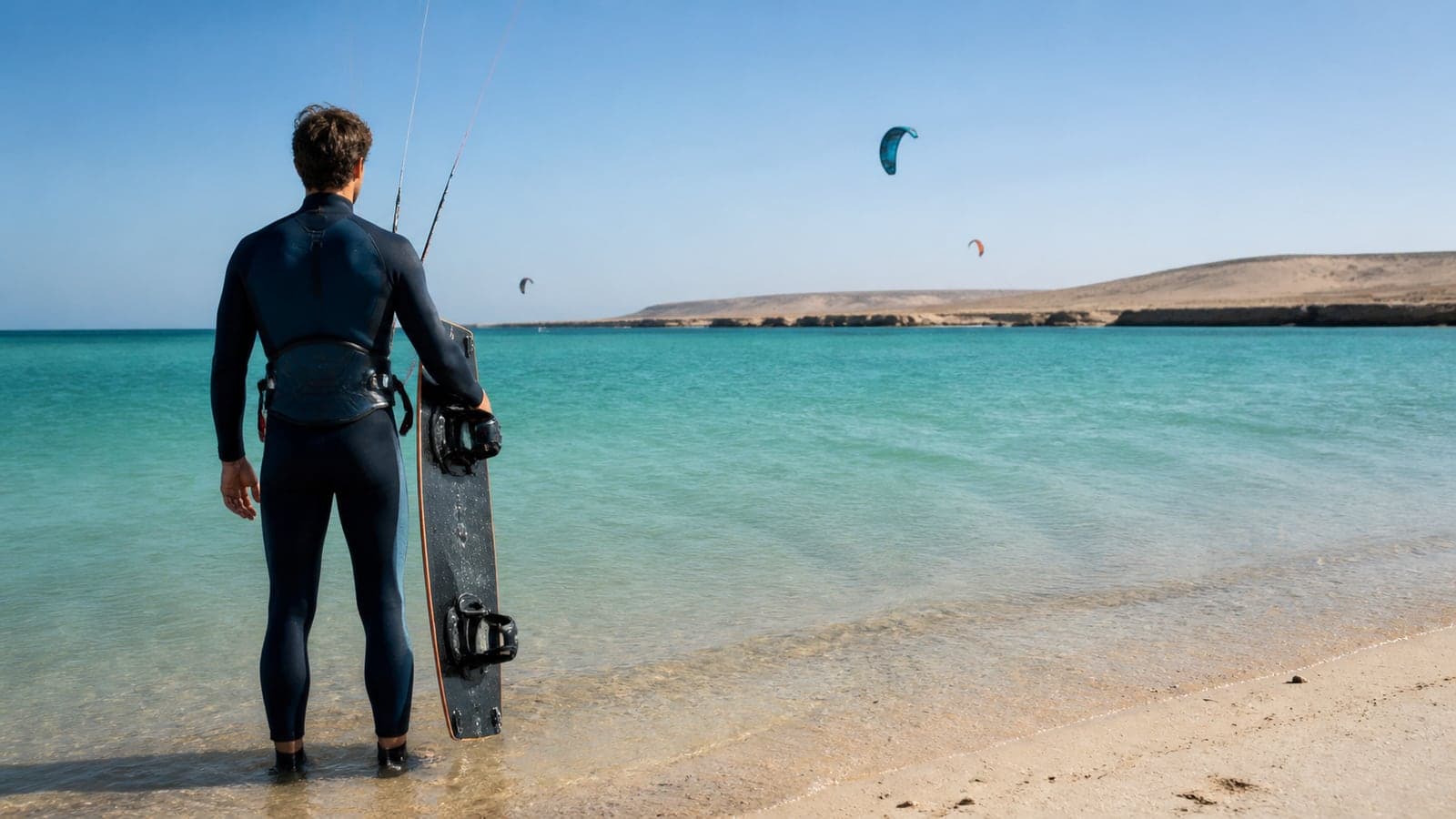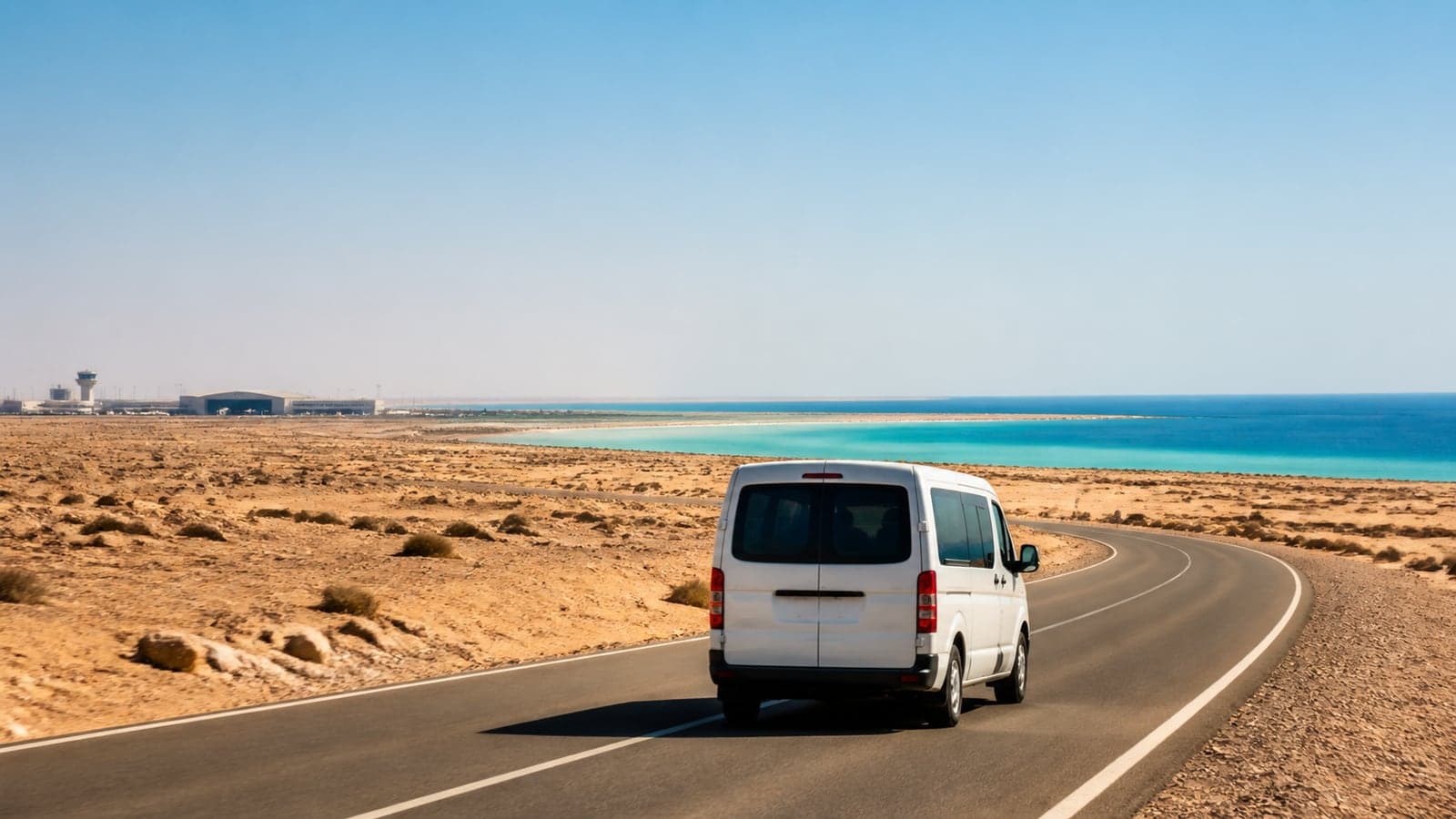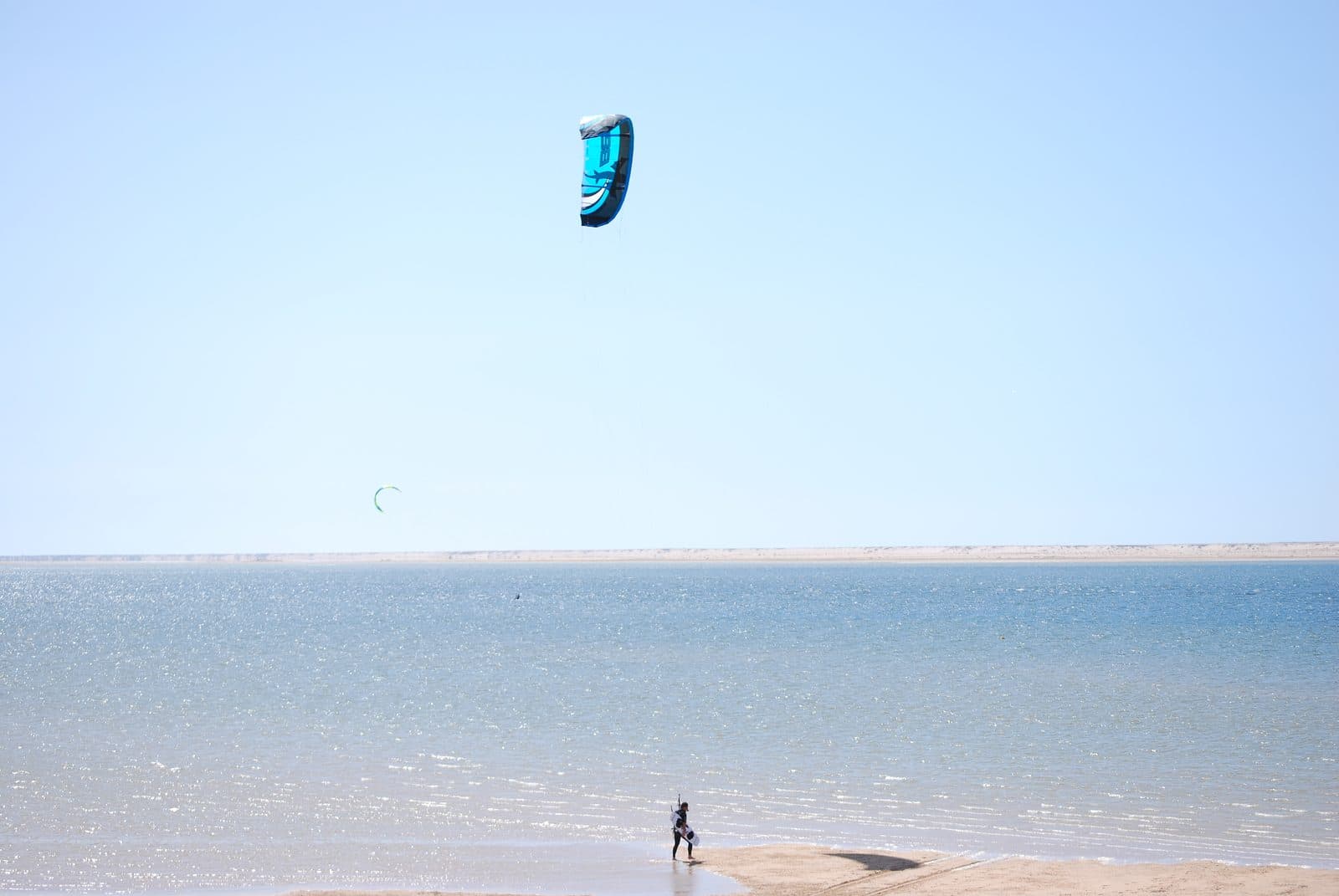
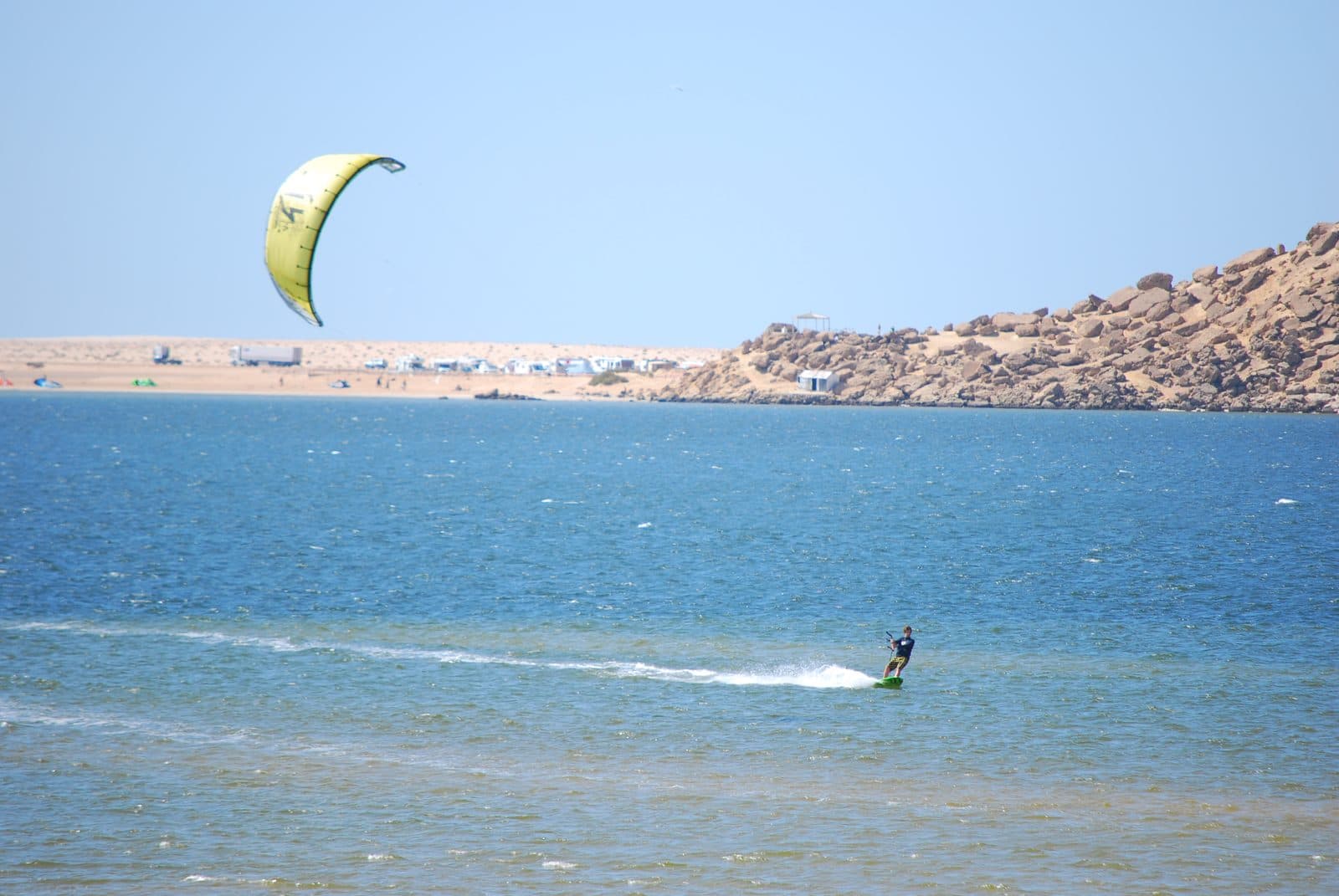
People talk about "kiting in Dakhla" as if it were one place. It is not. The peninsula is 40 km long, with a shallow lagoon on one side and the open Atlantic on the other, and the spots along it behave very differently. Choosing the right one for the day's wind, tide and your own level is what separates a great session from a long walk back upwind.
The geography in one paragraph
A narrow sand peninsula runs roughly north to south, parallel to the coast. Between the peninsula and the mainland sits the lagoon: shallow, protected and flat. On the western side of the peninsula is the Atlantic, with swell, waves and cold water. The dominant wind is north-east, which is side-onshore on the lagoon and offshore on the ocean side. That single fact drives every spot decision you will make.
The main lagoon camps
Most schools and camps sit along the eastern shore of the lagoon, roughly 25–35 km north of the city. This is the default choice and the right one on the great majority of days.
- Level: everyone, from first lesson to advanced freestyle.
- Water: shallow, chop that builds through the afternoon, large standing areas at low tide.
- Wind: side-onshore on a NE trade, usually 18–28 knots in season.
- Watch for: crowded launch areas at peak season around 15:00–17:00.
PK25
PK25 takes its name from the kilometre marker on the road north. It is the classic flat-water freestyle zone: sandbanks create long, glassy sections, particularly as the tide drops.
- Level: intermediate and above, mainly because of access and the tide-dependent layout.
- Best conditions: mid to low tide with a steady NE wind. High tide covers the flat sections and adds chop.
- Watch for: unmarked tracks. Do not drive onto wet salt flats — vehicles sink through the crust and recovery is expensive.
The speed spot
Behind certain sandbanks the water is so flat it looks solid. These short runs are where speed sailors and freestylers spend their afternoons. The catch is logistics: the usable window is narrow, the return leg can be hard work, and the spot changes shape from season to season as sand moves.
Go with someone who has ridden it recently, and treat the tide table as part of your equipment.
Dragon Island and the White Dune
These are the postcard locations of Dakhla — a rocky island reachable at low tide and a bright dune dropping straight into turquoise water. Both are better as morning excursions than as sessions. The wind arrives later in the day, crossings are tide-dependent, and the White Dune in a 30-knot afternoon is a sandblasting machine rather than a photo opportunity.
Foum Labouir — the wave side
At the tip of the peninsula, Foum Labouir is Dakhla's best-known wave spot: a long right-hand point break exposed to North Atlantic swell. It is an entirely different sport from the lagoon.
- Level: advanced only. The trade wind is offshore here, which grooms the wave beautifully and makes self-rescue much harder.
- Best season: October to March, when swell is biggest and most consistent.
- Watch for: rocks, current, and water 2–3 °C colder than the lagoon.
Porto Rico and the northern beaches
North of the lagoon, the ocean beaches are wide, exposed and much quieter. They suit surfing lessons, long walks and swimming away from the kite zones. As kite spots they are for experienced riders comfortable in real waves and stronger current.
Choosing your spot by wind direction
| Wind | Go here | Avoid |
|---|---|---|
| NE – N (normal) | Main lagoon camps, PK25, speed spot | — |
| E – SE | Nothing on the lagoon without supervision — the wind is offshore | Riding alone anywhere on the lagoon |
| N with big swell | Foum Labouir, if you are an experienced wave rider | The lagoon will be windy but flat and busy |
| S – SW (rare) | Ask locally; usually a disturbed, gusty day | Committing to a downwinder |
Downwinders
The classic Dakhla downwinder runs along the lagoon with a support vehicle meeting you at the end. It is one of the best experiences the region offers, and it is also the situation where people most often get into trouble: no phone signal, no rescue boat, and a shoreline that looks identical for kilometres. Only do it through a camp that provides a support vehicle, and never as the last session of the day.
Spot etiquette
- Give beginners space near the launch areas — they cannot always steer away from you.
- Right of way: rider going right (kite on the right hand forward) has priority; the upwind rider keeps their kite high.
- Do not launch across a school's teaching zone.
- Take your kite lines off the beach when you are finished — they are a genuine hazard for others.
Each spot on this site has its own live forecast page, because wind at PK25 and wind at Foum Labouir on the same afternoon are not the same wind.