Dakhla looks tropical in photographs, but the Atlantic is cooled by the Canary Current and coastal upwelling. Sea temperatures remain moderate through the year, roughly 18–21 °C in our 2021–2025 Open-Meteo marine averages. Sunshine can make the beach feel hot while a long, windy session still chills the body. The correct wetsuit therefore depends on season, session length, wind and personal tolerance—not air temperature alone.
Monthly water temperature and starting point
| Months | Typical sea temperature | Practical starting point |
|---|---|---|
| December–March | About 18–19 °C | 4/3 mm full suit; 3/2 mm for warm riders or short sessions |
| April–June | About 18–20 °C | 3/2 mm full suit; add a wind layer if you chill easily |
| July–October | About 20–21 °C | 3/2 mm or shorty; full suit remains useful in strong wind |
| November | About 20 °C | 3/2 mm full suit for most riders |
These are starting points, not safety rules. A beginner spending time in the water loses heat faster than an experienced rider staying on the board. A two-hour afternoon session in 25 knots also feels colder than a quick swim at the same measured temperature.
Lagoon versus open ocean
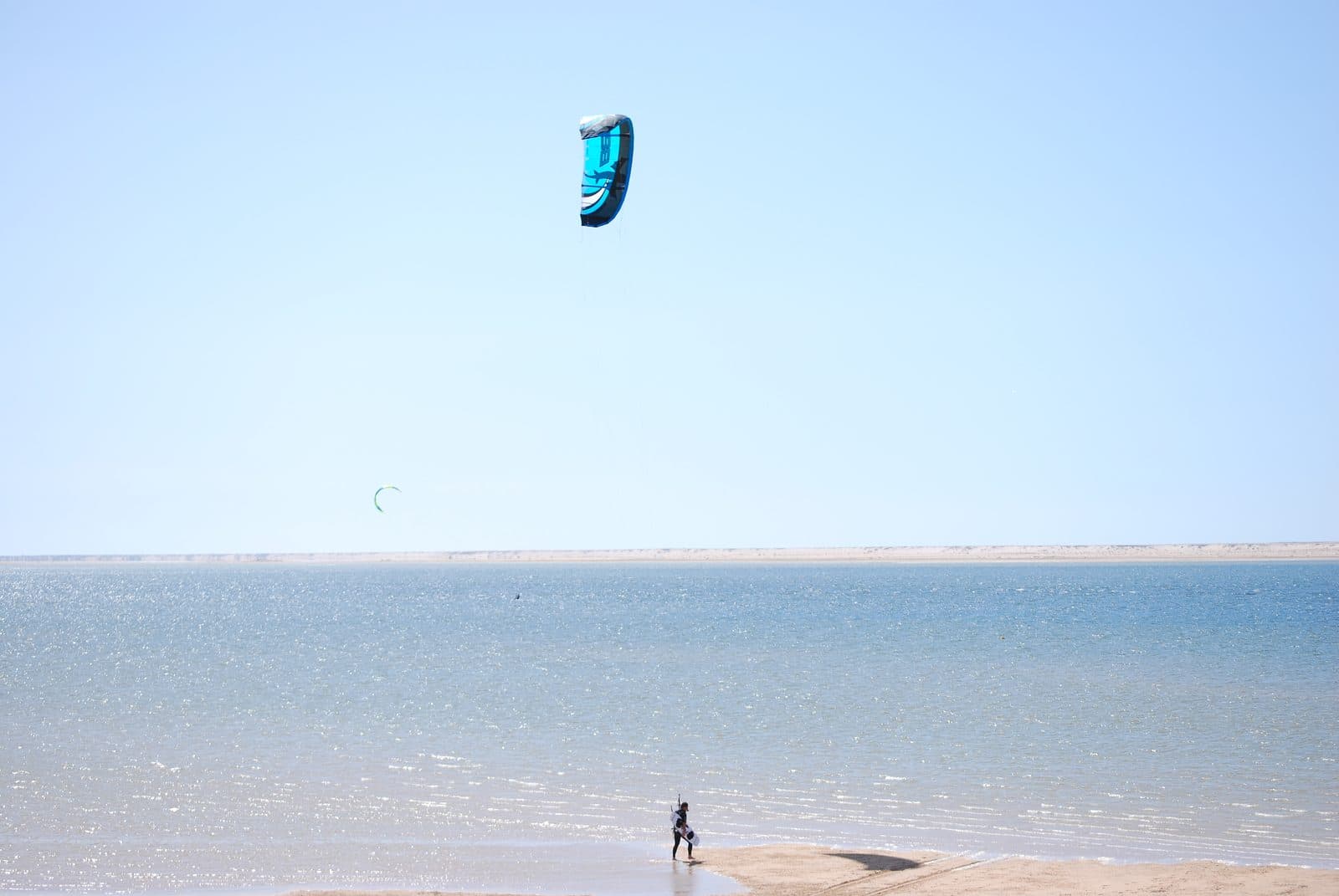
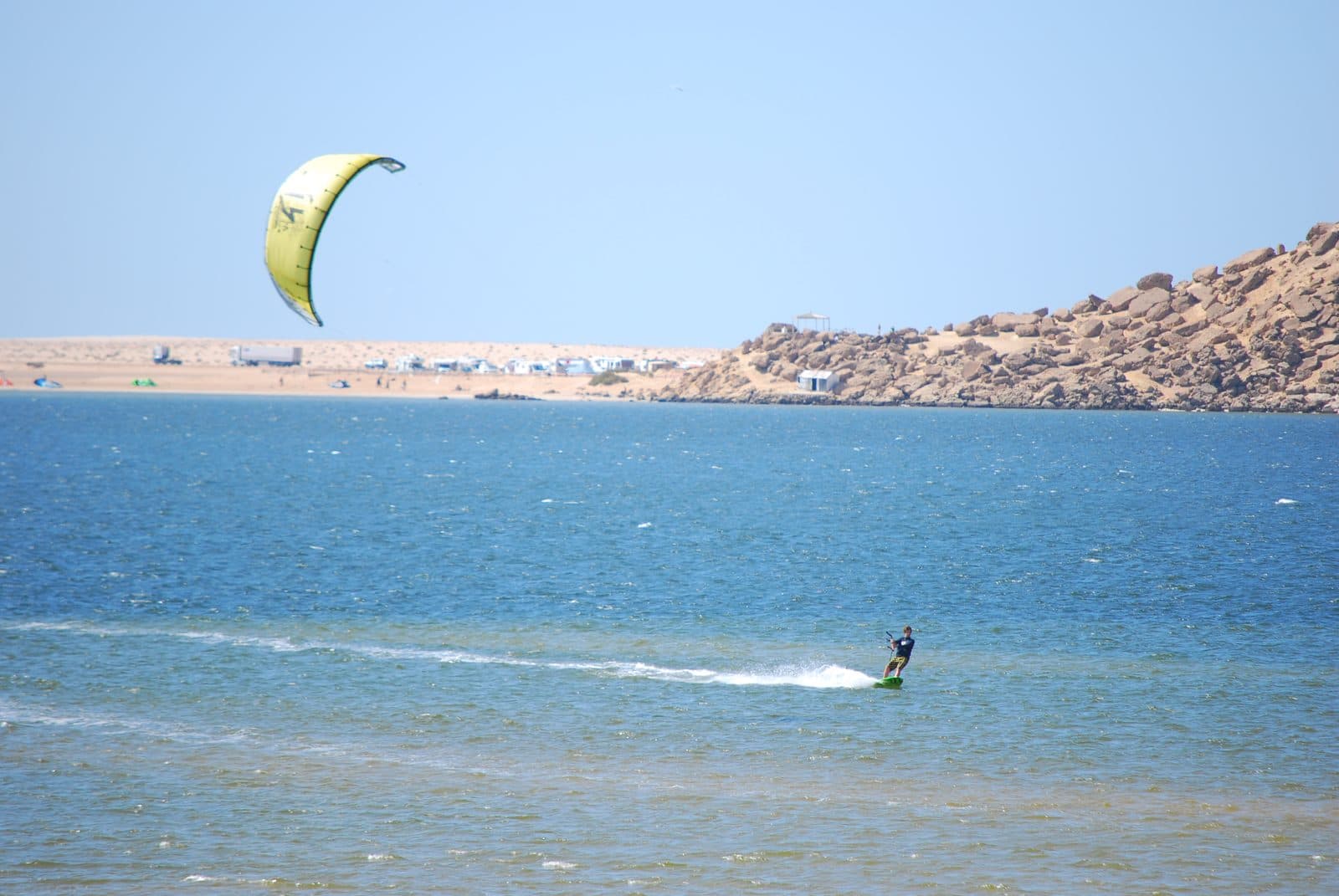
The shallow lagoon can warm under strong sun, especially near shore and around lower water, but tides exchange that water and wind mixes the surface. The open Atlantic at Foum Labouir or Lassarga is more exposed to swell, current and upwelling. Do not select a suit from one warm step into shallow lagoon water if the planned session is on the ocean side.
Why wind changes everything
Evaporation removes heat rapidly from a wet suit. Dakhla’s best kite days are also its windiest, so a rider can feel comfortable in the water and cold while standing on the beach relaunching a kite. A smooth-skin wind panel or a thin neoprene top under a 3/2 mm suit can be more useful than carrying a bulky winter suit.
What different visitors should pack
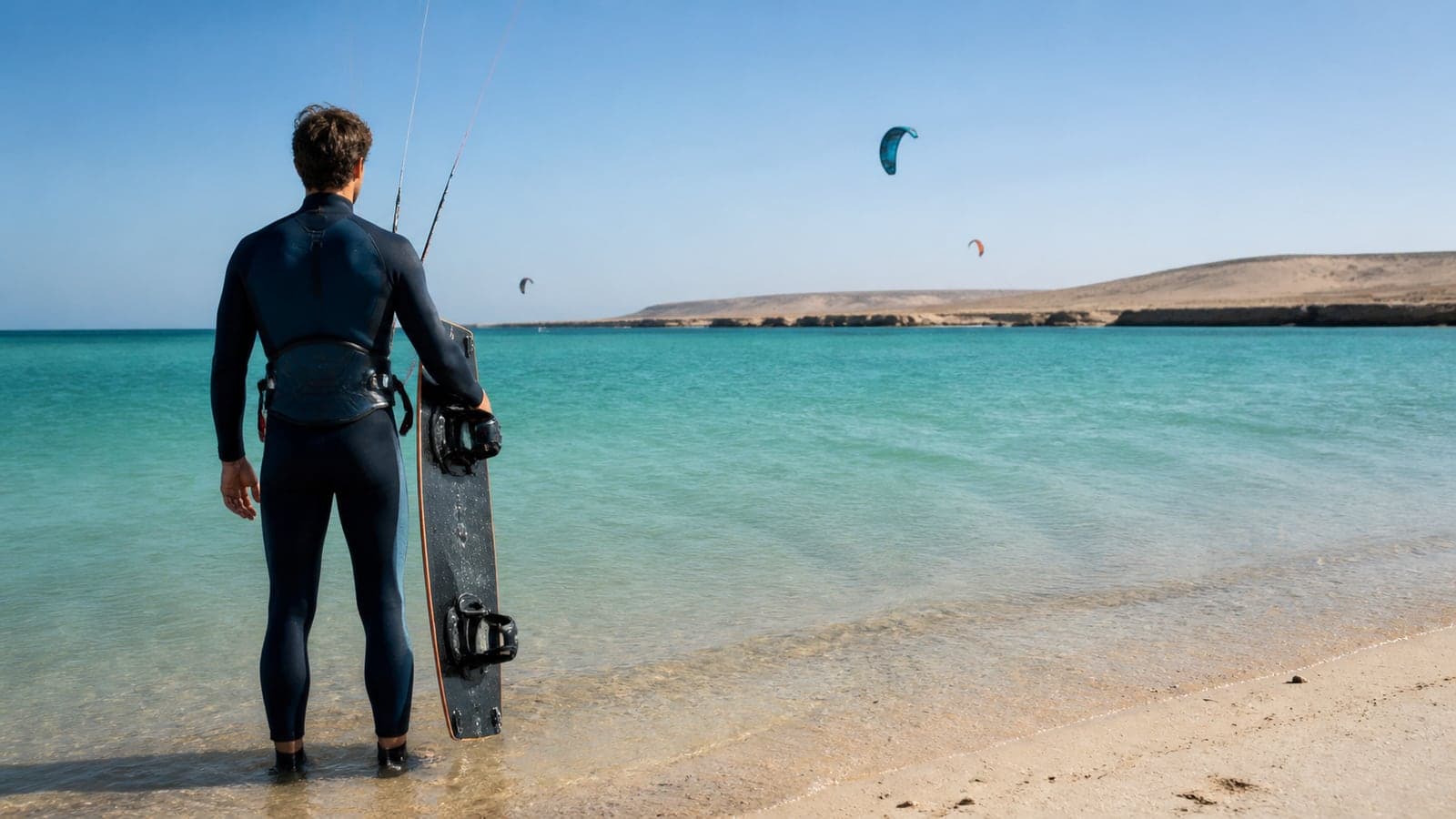
- Beginner kitesurfer: favour a full suit because lessons include body dragging, water starts and waiting.
- Experienced rider: a flexible 3/2 mm covers much of the year; add a 4/3 mm for winter if you run cold.
- Surfer: choose more insulation than a kiter for the same temperature because you spend more time immersed.
- Casual swimmer: late summer and early autumn are mildest, but exposure time still matters.
Fit matters more than the label
A close-fitting 3/2 mm suit can be warmer than a loose 4/3 mm suit that flushes at the neck. Check the neck seal, lower back and cuffs. Repair small tears before travelling and rinse the suit in fresh water after sessions. Dry it in shade; intense sun ages neoprene and glue.
Do you need boots?
Boots are mainly a protection choice. Some launch areas contain shells or rough ground, while sandy camp launches may not require them. Ask the local school about the exact entry. If you use boots, practise with them before the trip because they alter board feel and foot-strap fit.
Final recommendation
If you want one versatile answer, bring a good 3/2 mm full suit from spring through autumn and a 4/3 mm for winter or strong sensitivity to cold. Add a shorty only as an optional warm-weather piece. Check the live sea temperature and weather before each session and combine it with wind strength, cloud cover and planned time on the water.