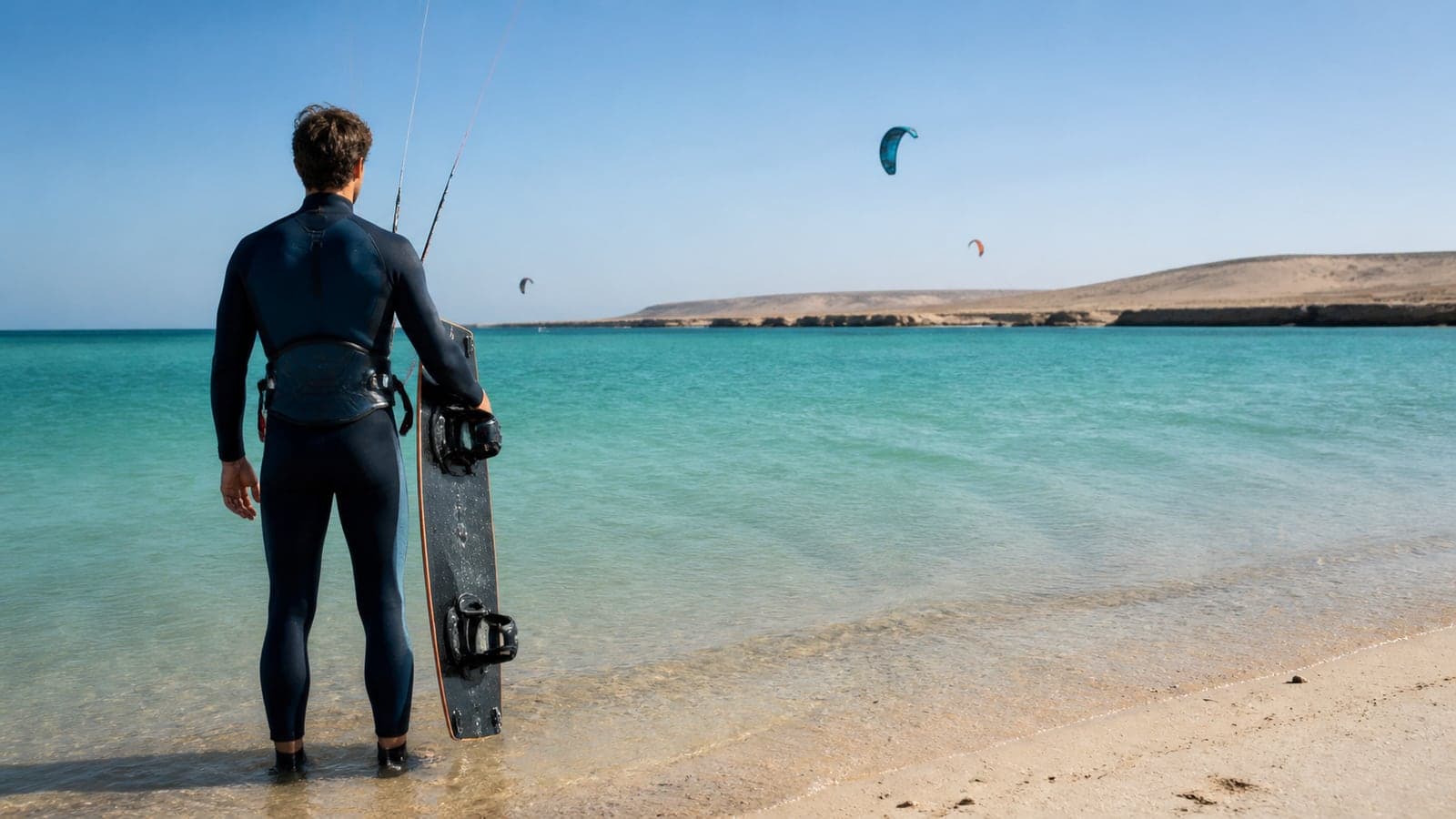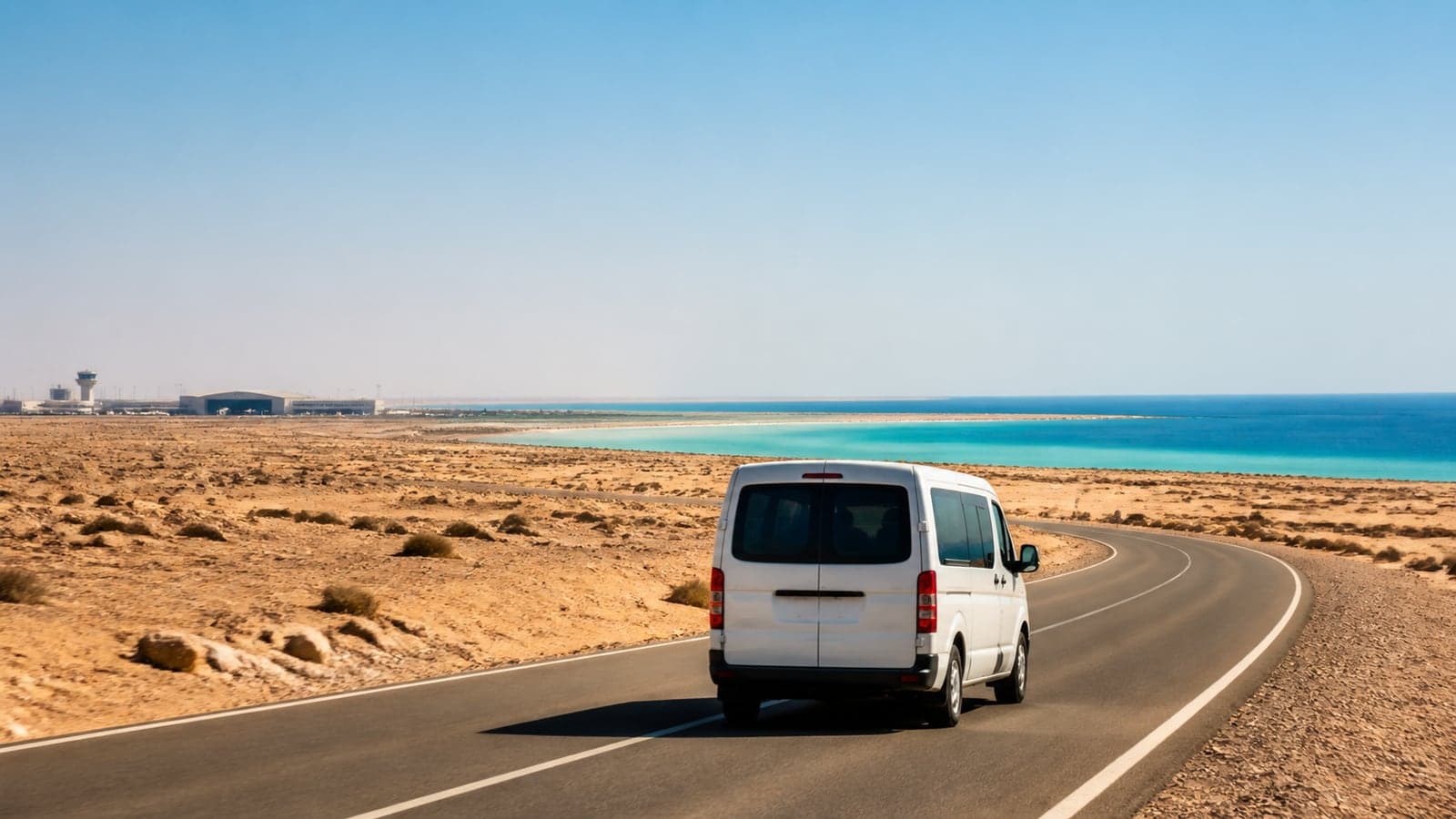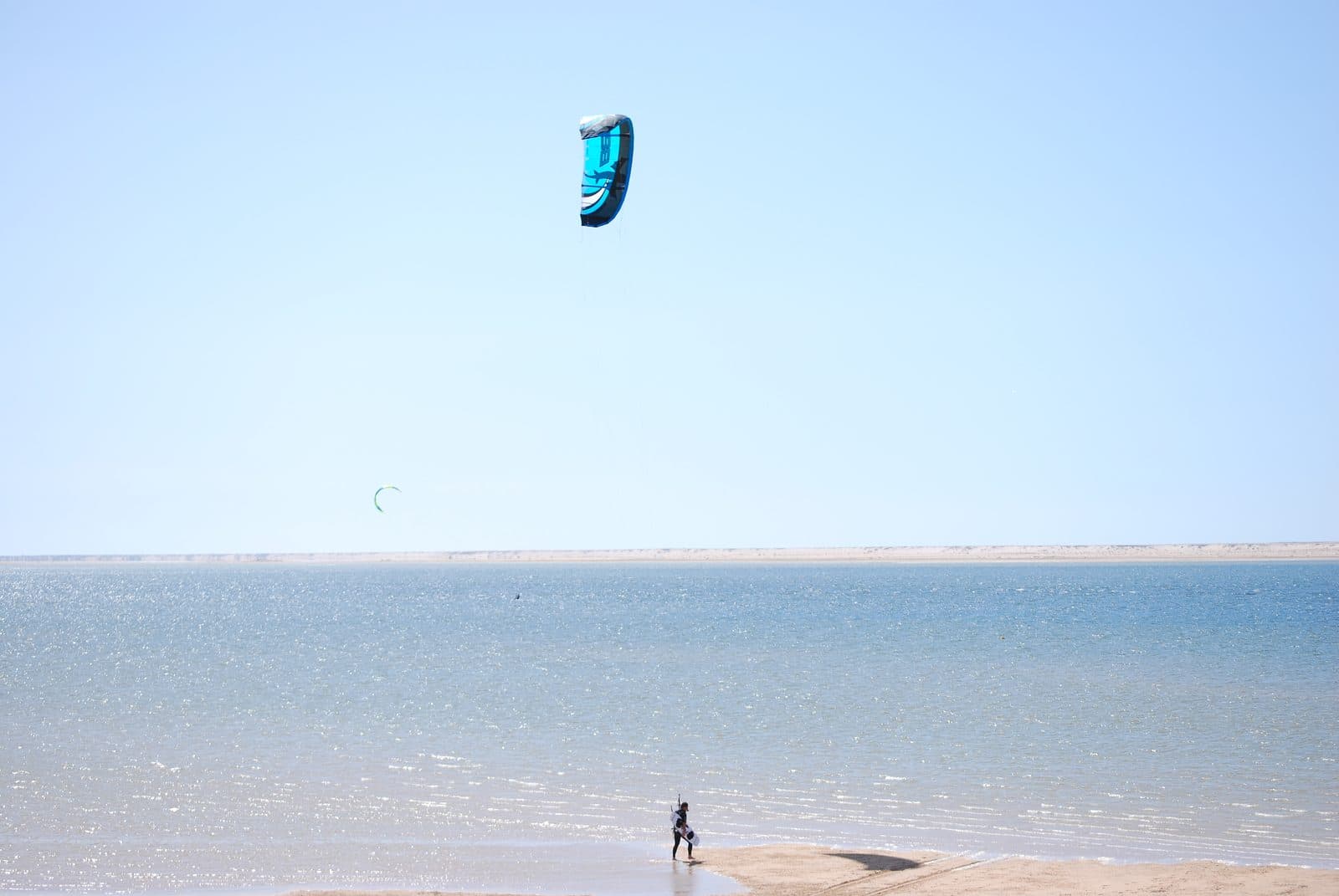
There is no bad month in Dakhla — but there are clearly better months depending on what you are here for. Wind riders, surfers, desert travellers and families each have a different answer.
The quick answer
- Kitesurfing and wing foiling: April to September, with May–July the most reliable.
- Surfing: October to March, when the North Atlantic swell is biggest and the wind is lighter.
- Sightseeing, desert trips and warm-weather escape: October to April — comfortable days, quiet spots, low prices.
- Best all-round compromise: late September and early October — warm water, good wind, thinner crowds.
Winter: December, January, February
Highs around 24 °C, lows near 14 °C, and the calmest wind of the year — although "calm" here still means 12–20 knots on many afternoons. The water is at its coldest (17–19 °C), so a 4/3 mm wetsuit is essential. This is the season for surfers, for cheap flights, and for anyone who wants the White Dune and Dragon Island to themselves. Nights are genuinely cool: bring a proper jacket for the desert excursions.
Spring: March, April, May
The wind machine switches on. By April the trade wind is blowing hard on most afternoons and the kite camps fill up. Temperatures sit around 24–25 °C with lows near 15–17 °C. The water is still cold (17–19 °C) but the air is comfortable and the light is superb. Late April and May are, for many riders, the best weeks of the entire year: strong reliable wind and not yet the peak summer crowd.
Summer: June, July, August
Peak wind and peak crowds. Highs climb only to 26–28 °C — remarkably mild for a Saharan latitude in August — and the constant breeze keeps it pleasant. Water warms to 20–21 °C, the most comfortable of the year. Book accommodation and camps months in advance; this is when European schools are out and Dakhla is at its busiest. Morning fog is most common in this window and typically clears before midday.
Autumn: September, October, November
September is quietly the best month overall: the warmest air (highs near 29 °C), the warmest water (around 21 °C), and still-strong wind, but with the August crowd gone. October keeps the warmth while the wind starts to ease and the first real swells arrive — the crossover month for people who both kite and surf. November brings shorter days, lighter wind and the start of proper surf season.
Crowds and prices
Dakhla's high season follows the wind, not the sun. Expect the highest prices and fullest camps from April through August, a noticeable drop in September, and the cheapest, quietest period from November to February. Moroccan and Spanish school holidays cause short local peaks; Ramadan changes opening hours in town but has little effect on the camps.
What about the desert excursions?
Trips to Imlili Sebkha, the White Dune and the inland dunes are far more pleasant between October and April. In midsummer the inland stops are 8–12 °C hotter than the coast and there is no breeze to soften it. If you travel inland in summer, go early in the morning and carry more water than you think you need.
Month-by-month at a glance
| Month | Wind | Water | Best for |
|---|---|---|---|
| January | Moderate | 18 °C | Surf, quiet trips, low prices |
| February | Building | 17 °C | Surf, wildlife, empty spots |
| March | Strong | 18 °C | Early kite season |
| April | Strong | 19 °C | Kite, wing, freestyle |
| May | Strong | 19 °C | Kite — best all-round conditions |
| June | Very strong | 20 °C | Kite, foiling |
| July | Very strong | 20 °C | Kite — peak season |
| August | Strong | 21 °C | Kite, families, warm water |
| September | Strong | 21 °C | Best all-round month |
| October | Moderate | 21 °C | Surf + kite crossover |
| November | Moderate | 20 °C | Surf, desert trips |
| December | Moderate | 19 °C | Winter sun escape |
Whatever month you choose, check the live hourly forecast before you commit to a session or an excursion — in Dakhla the day matters far less than the hour.