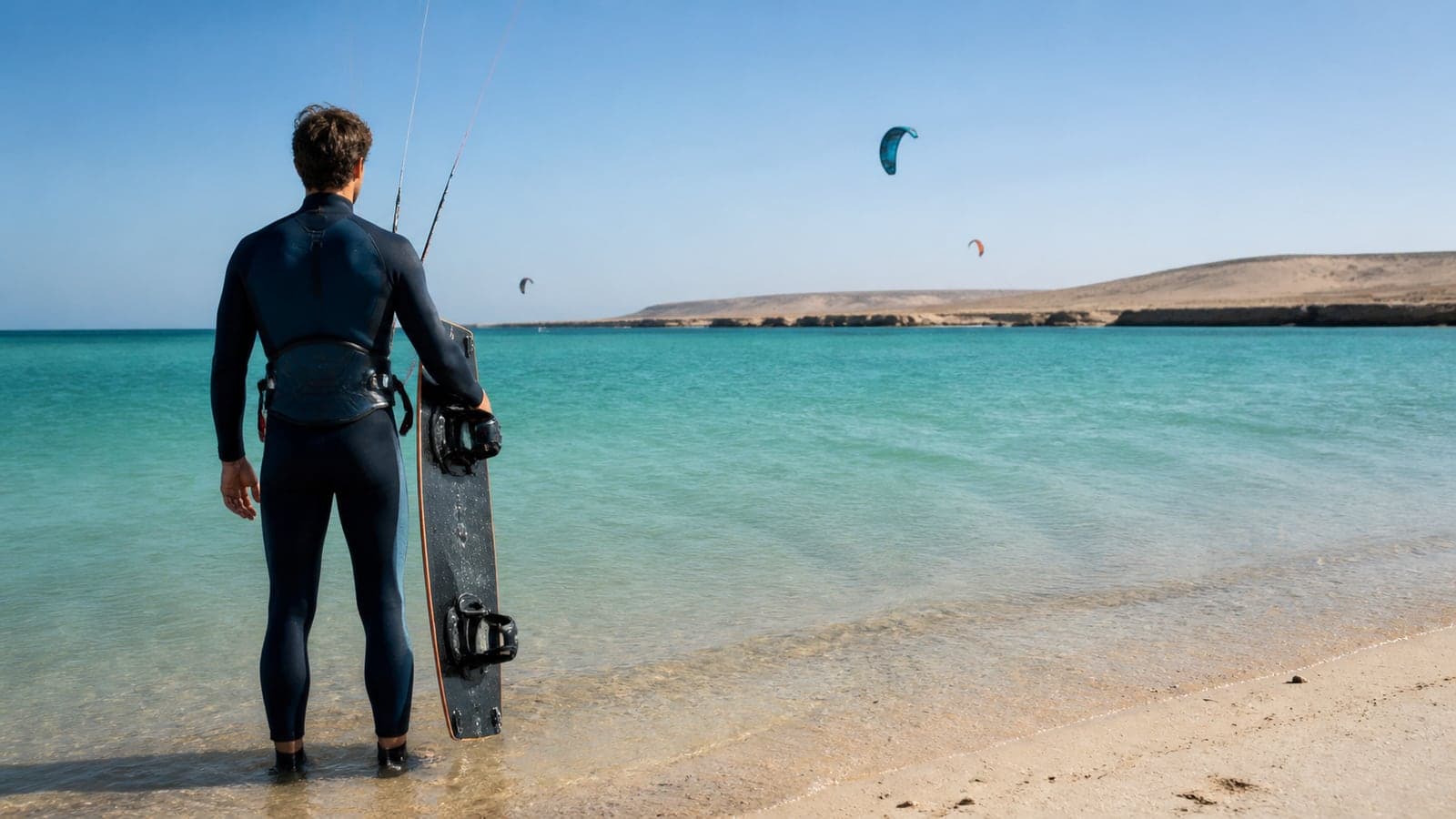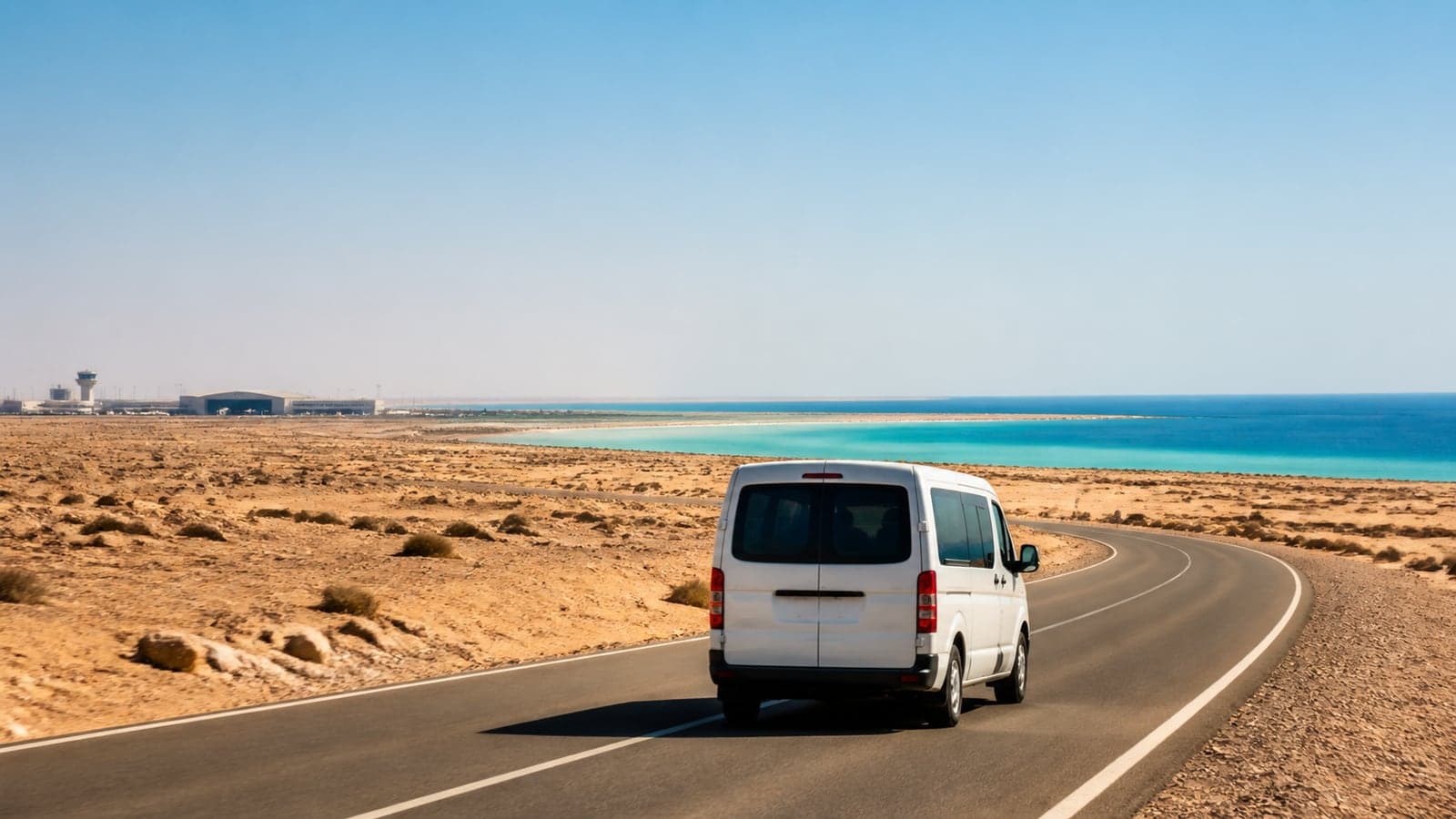
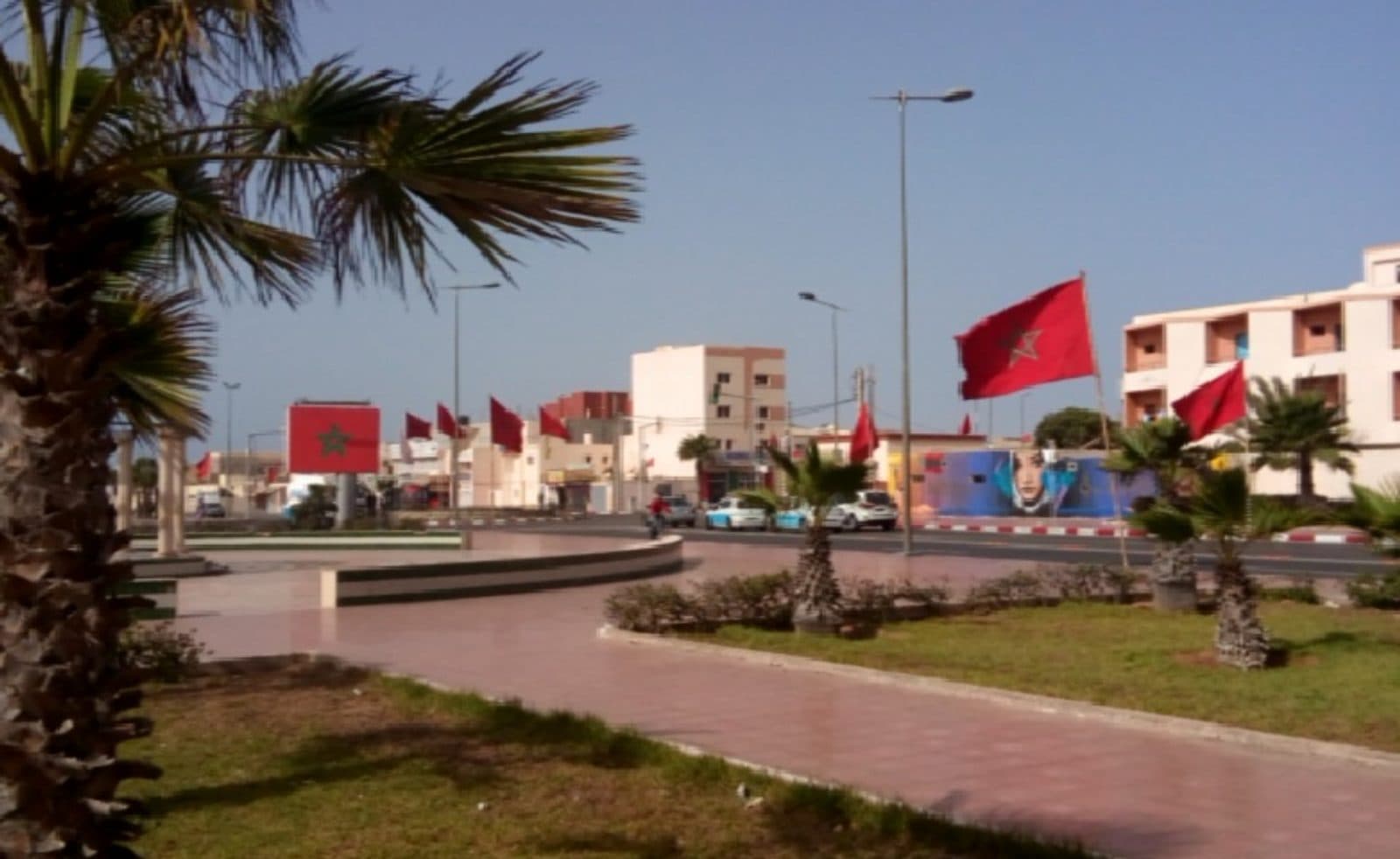
The kite camps sit 25 to 35 kilometres north of Dakhla, which means a lot of visitors spend a week in the region and never really see the city. That is a shame — not because Dakhla is a monumental tourist town, but precisely because it is not. It is a working Atlantic port at the end of a very long road, and a day there is the most interesting cultural thing most visitors will do on the trip.
Understanding the setting
The city occupies the southern end of the peninsula, with the Atlantic on both sides. That is why its climate is so extraordinarily stable: highs between 24 °C and 29 °C all year, lows rarely below 14 °C, and almost no rain. It also means there is always a breeze, and evenings feel fresh even in August.
Fishing is the economic engine. The cold Canary Current that keeps the water at 17–21 °C also makes it exceptionally rich, and the port reflects that.
The market, early
Go to the municipal fish market in the morning — this is when the town is at its most alive. The variety on the ice is remarkable: Atlantic species, octopus, and the oysters that Dakhla Bay is known for across Morocco. Even if you are not buying, it is the best 30 minutes of observation available in the city.
The produce market next door sells dates, olives, spices and vegetables trucked down from the north. Prices are generally fixed for food; bargaining is expected for crafts and textiles, not for fish.
Eating in Dakhla
The seafood is the reason to eat in town rather than at the camp.
- Grilled fish — sea bream, corvina, sole, whatever came in that morning. Usually sold by weight; agree the price before it goes on the grill.
- Oysters — farmed in the bay, served simply. Among the cheapest good oysters you will find anywhere.
- Octopus — a local speciality, grilled or in tagine.
- Tagine and couscous — the Moroccan standards; couscous is traditionally a Friday dish.
- Mint tea — poured from height, sweeter than you expect, and part of the social contract of any conversation.
Restaurants along the waterfront and around the centre are simple and inexpensive. Alcohol is limited to a small number of hotels; do not expect it in ordinary restaurants.
What to see
Dakhla is not a city of monuments, and a half day covers its main sights comfortably.
- The waterfront (corniche) — the natural evening walk, with the bay on one side and the town on the other.
- The old Spanish church — a small reminder that this was Villa Cisneros under Spanish administration until 1975.
- The lighthouse and the point — the southern tip of the peninsula, good at sunset.
- The port — busy, industrial and interesting; ask before photographing.
- Small shops and the artisan stalls — Sahrawi textiles, silver, and the darraa robes worn locally.
Practical notes
- Getting there: camps run shuttles; a taxi from the northern camps takes roughly 30–40 minutes. Agree the fare first.
- Getting around: petits taxis within the city are cheap and plentiful.
- Money: dirhams. Card acceptance is improving but far from universal; there are ATMs in the centre.
- Language: Arabic and Hassaniya, with French widely used in business and some Spanish.
- Timing: many shops close in the early afternoon. Friday midday is quiet for prayers, and during Ramadan daytime hours change substantially while evenings become lively.
- Dress: this is a conservative town. Beachwear belongs at the camp, not in the market.
- Connectivity: local SIM cards (Maroc Telecom, Orange, Inwi) are cheap and far more reliable than roaming along the lagoon road.
A half-day plan
| Time | What |
|---|---|
| 09:00 | Fish market and produce market |
| 10:30 | Walk the centre, the Spanish church, small shops |
| 12:30 | Seafood lunch near the waterfront |
| 14:30 | Corniche walk, tea, back to the camp before the wind peaks |
Why go on a light-wind day
The obvious answer: because you are not missing a session. The better answer is that the city is more pleasant when the wind is down — the afternoon trade carries dust through the streets, and a 30 km/h breeze turns a relaxed lunch on a terrace into a fight with your napkin. Check the forecast, pick the lightest morning of your week, and go then.