Most visitors to Dakhla spend their week between a camp and the lagoon. That is understandable — but the landscape inland and south of the city is one of the strangest and emptiest places in Morocco, and a single well-planned day is enough to see it.
Why the timing matters more than the itinerary
The coast is air-conditioned by the Atlantic. Average highs on the peninsula stay between 24 °C and 29 °C all year. Drive 40 km inland and that protection disappears: the same afternoon can be 8–12 °C hotter, with no sea breeze at all.
This gives one firm rule: go between October and April if you can, and start early whatever the season. In midsummer, leave at sunrise and be back on the coast by early afternoon.
The classic route
A full day usually combines three very different landscapes.
1. The lagoon viewpoints and the White Dune
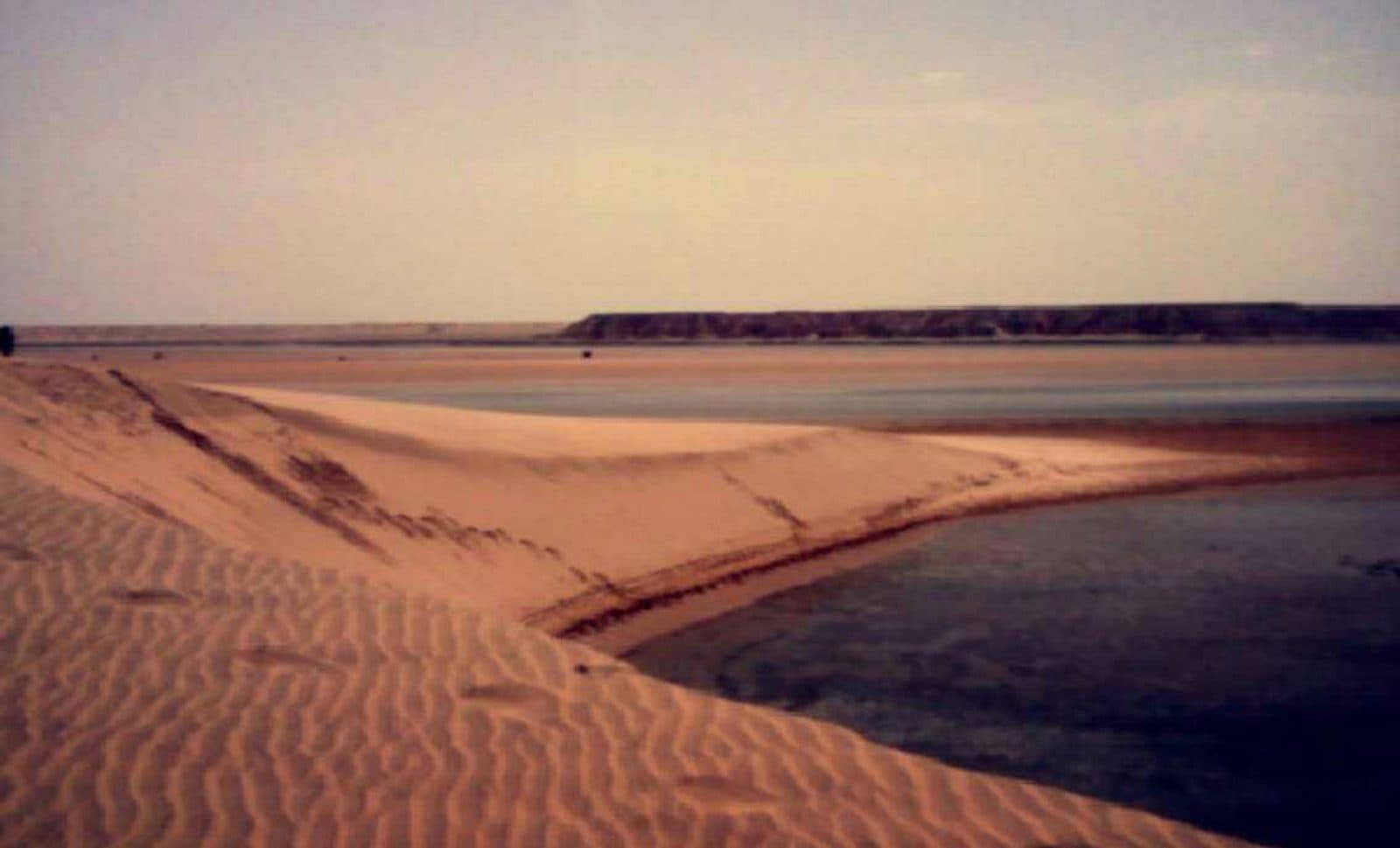
The road north of the city runs along the lagoon. There are several points where you can look down over the water, and the White Dune — a bright sand ridge dropping into turquoise shallows — is the single most photographed spot in the region. Access depends on the tide; at high water the approach can be flooded.
Go in the morning. By mid-afternoon the trade wind is lifting sand off the dune hard enough to sting, and the light is flat.
2. Dragon Island
A small rocky island in the lagoon, reachable on foot or by short boat crossing at low tide, known for wild oysters and for a shape that gives it its name. This stop is entirely tide-dependent — check the tables the evening before, not on the day.
3. Imlili Sebkha
Around 60 km south of the city lies a salt flat containing hundreds of small permanent pools of warm salt water, some several metres deep, isolated in the middle of the desert. They host a fish population that has been studied precisely because it should not exist there. It is a geological curiosity rather than a swimming spot, and it deserves to be treated carefully.
- Do not enter the pools wearing sunscreen or insect repellent.
- Take everything out with you, including organic waste.
- Do not drive between the pools; park where your guide indicates.
Getting there
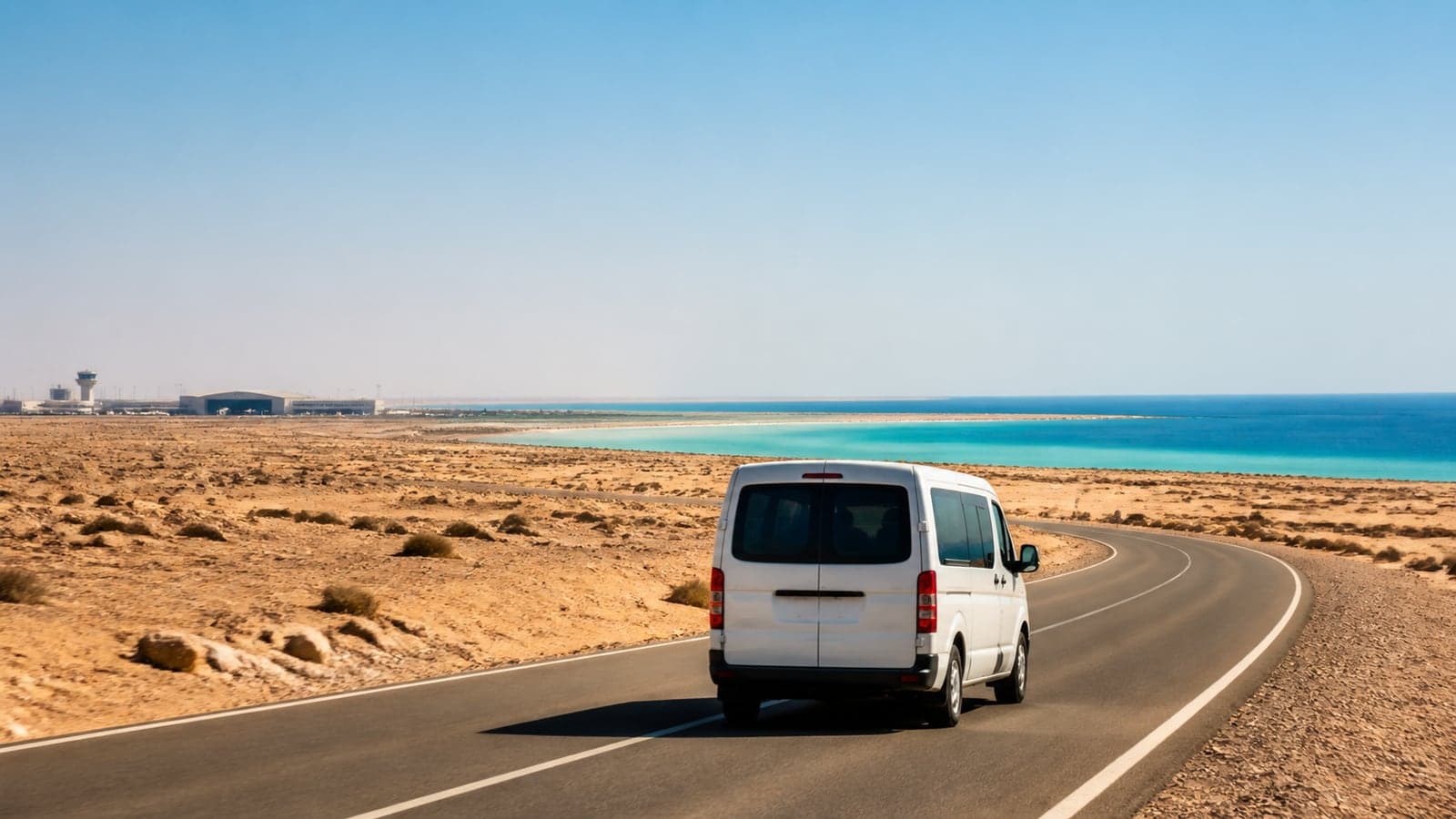
An ordinary rental car is not suitable for the tracks. Sand is soft, tracks are barely marked, and mobile coverage fades within a few kilometres of the main road. Go with a local driver in a 4×4, ideally one carrying recovery boards and a compressor for tyre pressure.
Expect a full-day excursion to run several hours of driving. Ask in advance whether lunch is included — many operators stop at a fishing shack or prepare a simple meal in the desert.
What to bring
- More water than you think you need. Humidity drops sharply away from the coast; the standard advice of two litres per person is a minimum, not a target.
- Closed shoes. Salt crust and stones cut sandals apart, and there are thorns.
- A hat, sunglasses and SPF 50. There is no shade anywhere on this route.
- A warm layer. The desert cools fast after sunset, and the drive back is often in the dark.
- Cash. Nothing on the route takes cards.
- A scarf or buff. The afternoon wind lifts fine sand everywhere.
Photography notes
The best light is the first two hours after sunrise and the last two before sunset. In January the sun rises around 08:45 and sets near 19:20; in June it rises around 07:15 and sets close to 20:50 — the monthly pages on this site list the exact times, which matters when you are planning a long drive.
Change lenses inside the vehicle. Fine sand carried on a 30 km/h wind will find any open camera body, and salt haze near the lagoon coats filters within minutes.
Wildlife and respect
This is a working landscape, not a theme park: there are nomadic herders, fishing shacks and protected areas along the coast. Ask before photographing people. Do not drive off established tracks — desert crust takes decades to recover from tyre marks. If you see the monk seals or dolphins that live along this coast, keep your distance.
A realistic day plan
| Time | Stop |
|---|---|
| 07:30 | Leave the camp or city |
| 08:30 | Lagoon viewpoints, White Dune in morning light |
| 10:00 | Dragon Island, tide permitting |
| 12:30 | Lunch, then the drive south |
| 14:30 | Imlili Sebkha |
| 17:30 | Return, arriving before or around sunset |
Check the day's forecast before you commit: a strong-wind afternoon changes a desert trip from memorable to unpleasant, and that information is on the home page.