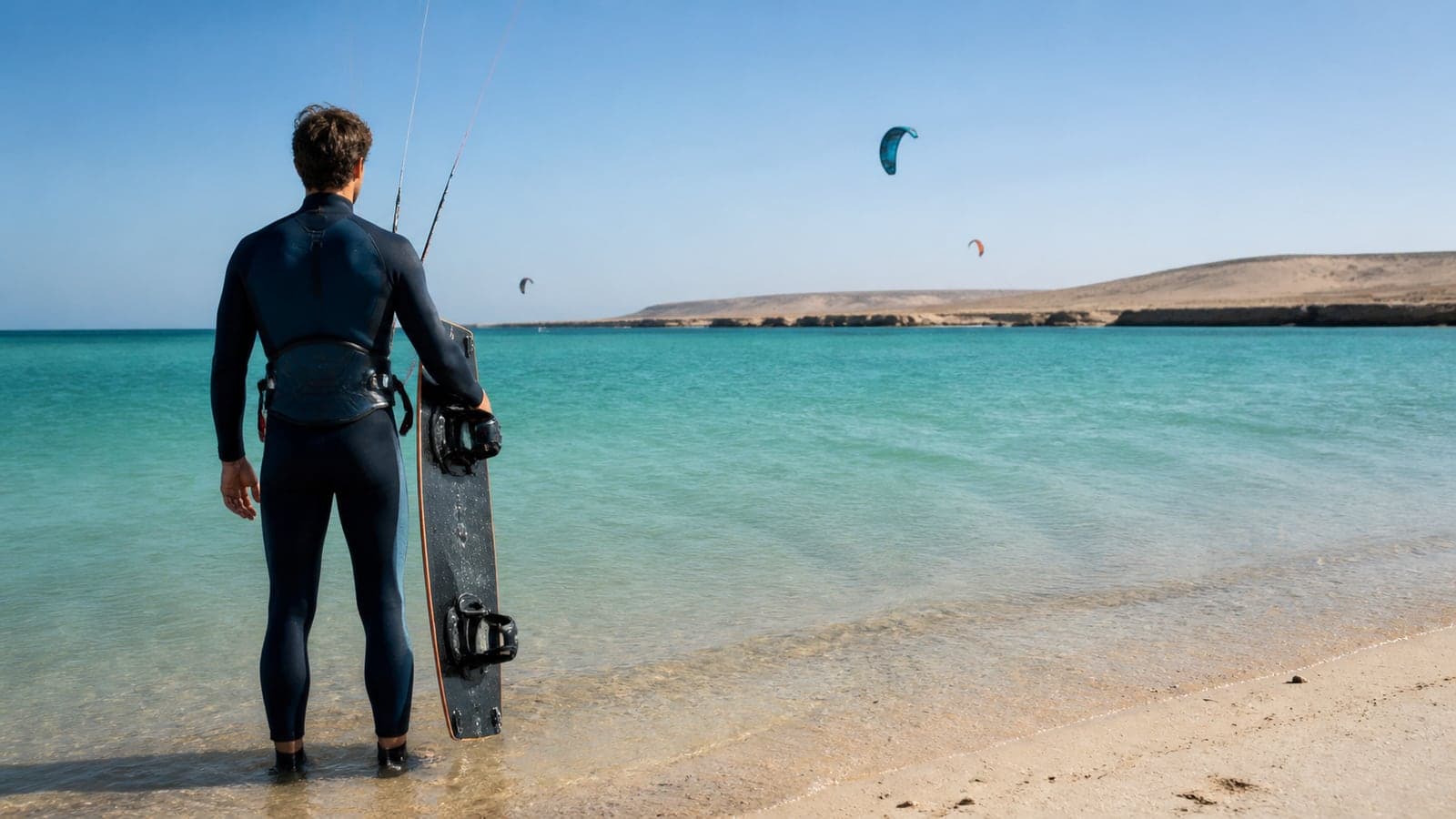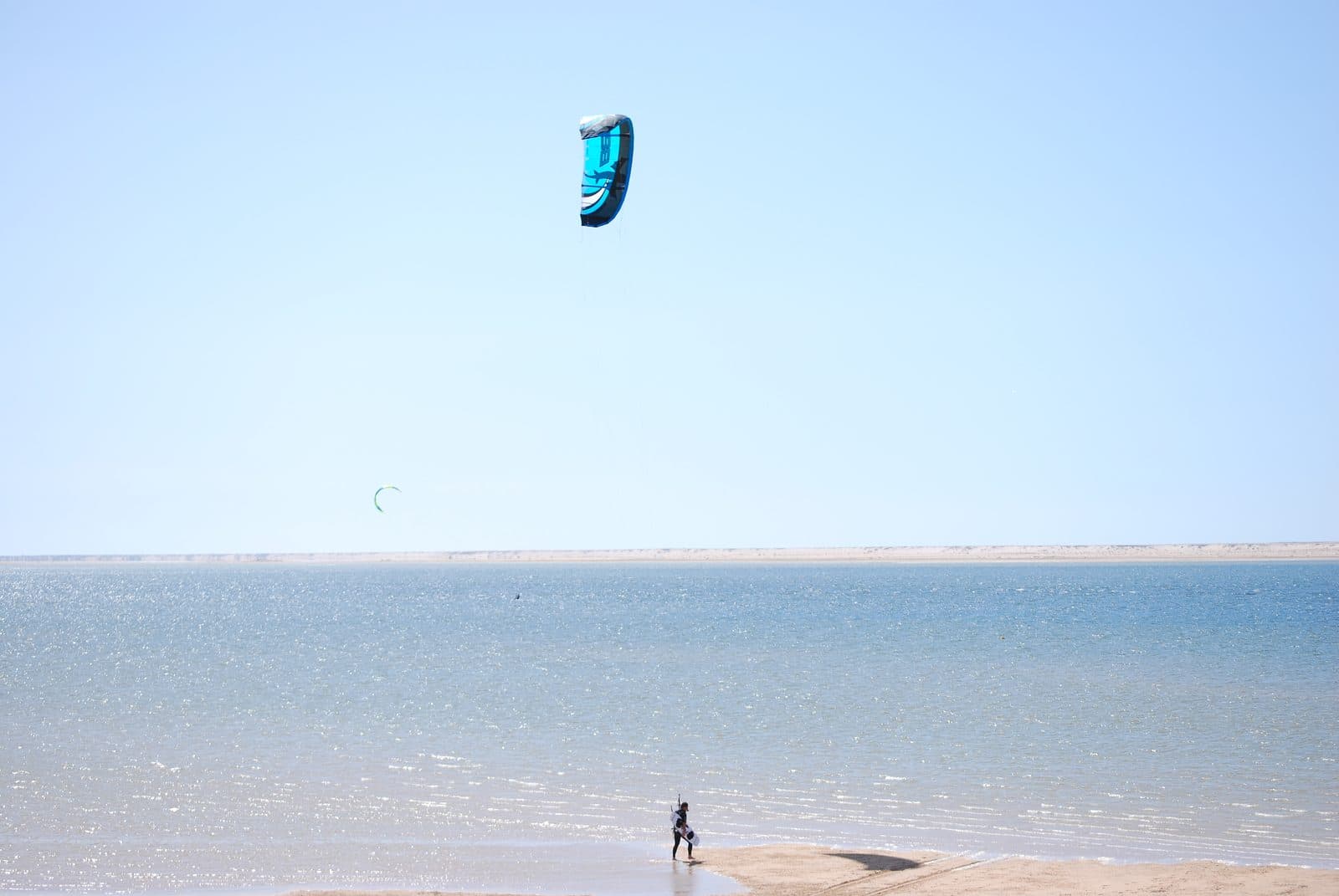
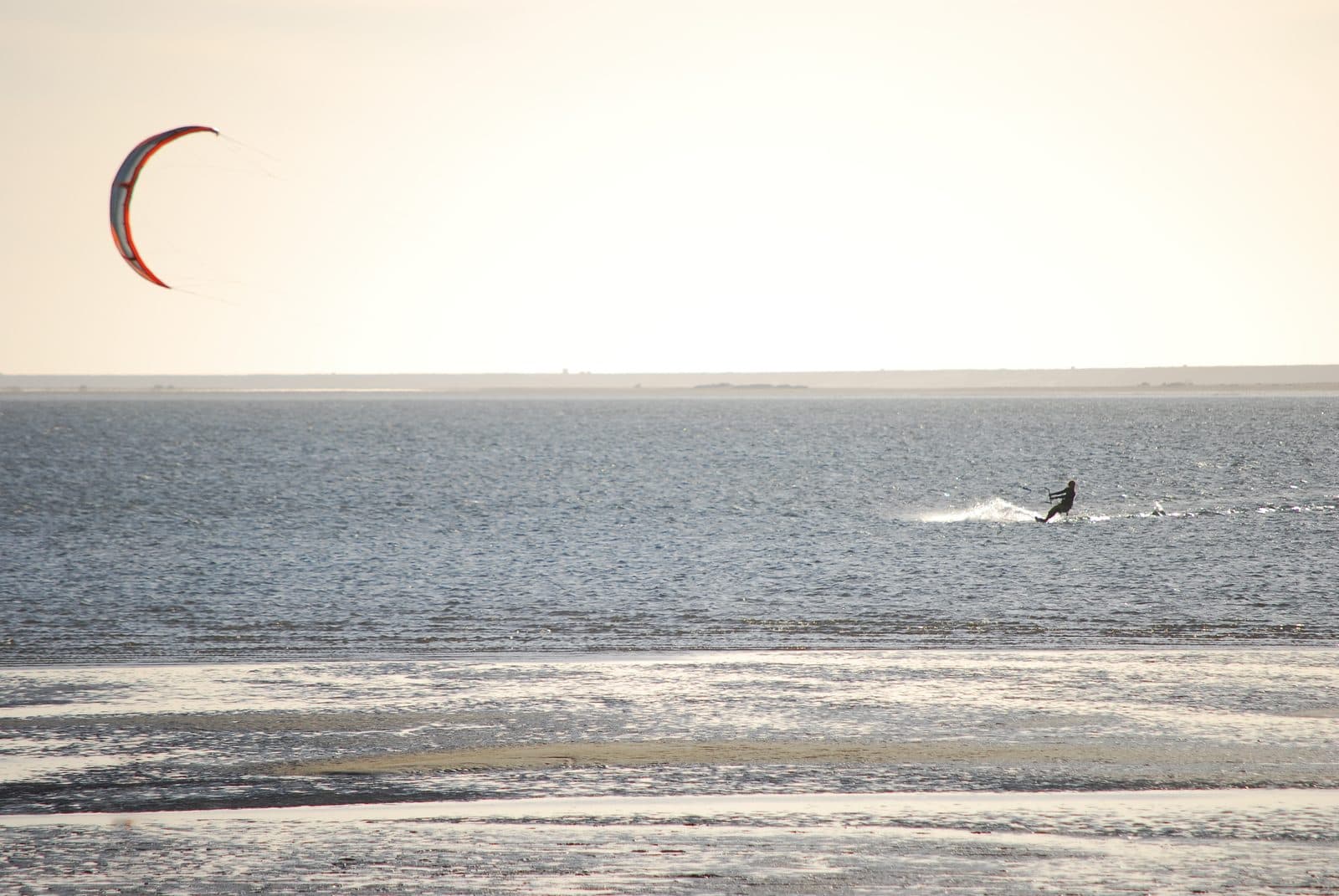
Dakhla has a reputation as a safe, forgiving destination, and for the most part that reputation is deserved: shallow water, side-onshore wind, organised camps with rescue boats. But the incidents that do happen here follow a small number of very predictable patterns, and every one of them is avoidable.
1. Direction matters more than strength
The single most important number on the forecast is not the wind speed — it is the wind direction.
| Direction | On the lagoon | Verdict |
|---|---|---|
| N – NE (normal) | Side-onshore: wind pushes you toward land | Safe for all levels |
| E – SE | Offshore: wind pushes you away from land | Dangerous without boat cover |
| S – SW | Usually a disturbed, gusty day | Ask locally before rigging |
An easterly comes off the Sahara. It is gustier, it carries dust, and on the lagoon it is offshore. If the wind swings east while you are on the water, come in — do not "just do one more run" downwind of your launch.
2. The gust ratio tells you what kind of day it is
Compare gust speed with sustained speed on the forecast:
- Under 1.3× — smooth, stable air. The pleasant kind of strong.
- 1.3 to 1.5× — noticeable punches; size down.
- Over 1.5× — unstable, often with an east component. Experienced riders only, and size your kite for the gusts rather than the average.
The kitesurf forecast page on this site shows sustained wind and gusts side by side in knots for exactly this reason.
3. The tide reshapes the spot
The lagoon is shallow and the tidal range is large. Across a single session, sandbanks appear where you were riding an hour ago, and deep channels become knee-deep. That has two consequences:
- Jumping. Never jump over water you have not crossed at that state of tide. Shallow water is what actually injures people here — far more than strong wind.
- Getting stranded. A falling tide can leave you on the wrong side of a bank with a long walk in soft mud. Check the tide table before you rig, not afterwards.
4. Stay inside rescue cover
The camps run boats and radios in defined zones. Outside those zones, on a 40 km lagoon with intermittent phone coverage, nobody is coming quickly.
- Learn your camp's rescue signal before your first session.
- Tell someone which direction you are riding and when you expect to be back.
- Never ride alone at the remote northern spots.
- Downwinders only with a support vehicle, and never as the last session of the day.
5. Self-rescue is not optional
If you cannot pack down your kite in the water and use it to sail or swim yourself to shore, you are dependent on someone else noticing you. Practise it in shallow, safe conditions with an instructor — ideally in your first week — and refresh it on the first day of each trip.
6. The ocean side is a different sport
Foum Labouir and the Atlantic beaches combine waves, rock, current and offshore trade wind. Sea temperature is 2–3 °C colder than the lagoon and the swell is unrefined North Atlantic energy. Do not ride there because the lagoon was crowded. Ride there when you have wave experience, reliable self-rescue and a local opinion on the day.
7. The sun is the hazard nobody plans for
The UV index in Dakhla regularly reaches 9–11 from April to September, and the constant wind removes the sensation of burning. Combined with dry air, this produces the two most common non-kiting problems visitors have: serious sunburn and dehydration.
- Long-sleeve lycra or a full suit, even on warm days.
- SPF 50 on face, ears and the back of the hands, reapplied after each session.
- Drink before the session, not only after. By the time you are thirsty on a 30 °C windy afternoon, you are already behind.
8. Check your gear before the trip, not on the beach
- Replace lines that have been repaired more than once; sand and UV age them faster here.
- Test the quick release and the safety system on land, every trip.
- Sand destroys pumps, bearings and zips — rinse everything in fresh water at the end of the day.
- Carry a spare pump leash and valve; the nearest well-stocked shop may be a long way away.
9. Insurance and medical reality
Medical facilities in Dakhla are limited, and serious cases are transferred north. Travel insurance that explicitly covers kitesurfing — many policies exclude it as an extreme sport — is not a formality here. Check the wording before you travel, and carry the policy number where someone else can find it.
The one-minute pre-launch check
- What is the wind direction, and is it side-onshore where I am standing?
- What is the gust ratio, and is my kite sized for the gusts?
- What is the tide doing over the next two hours?
- Who knows where I am going, and is there rescue cover in that zone?
- Have I tested my quick release today?
Five questions, one minute. Nearly every incident on this lagoon comes from skipping one of them.