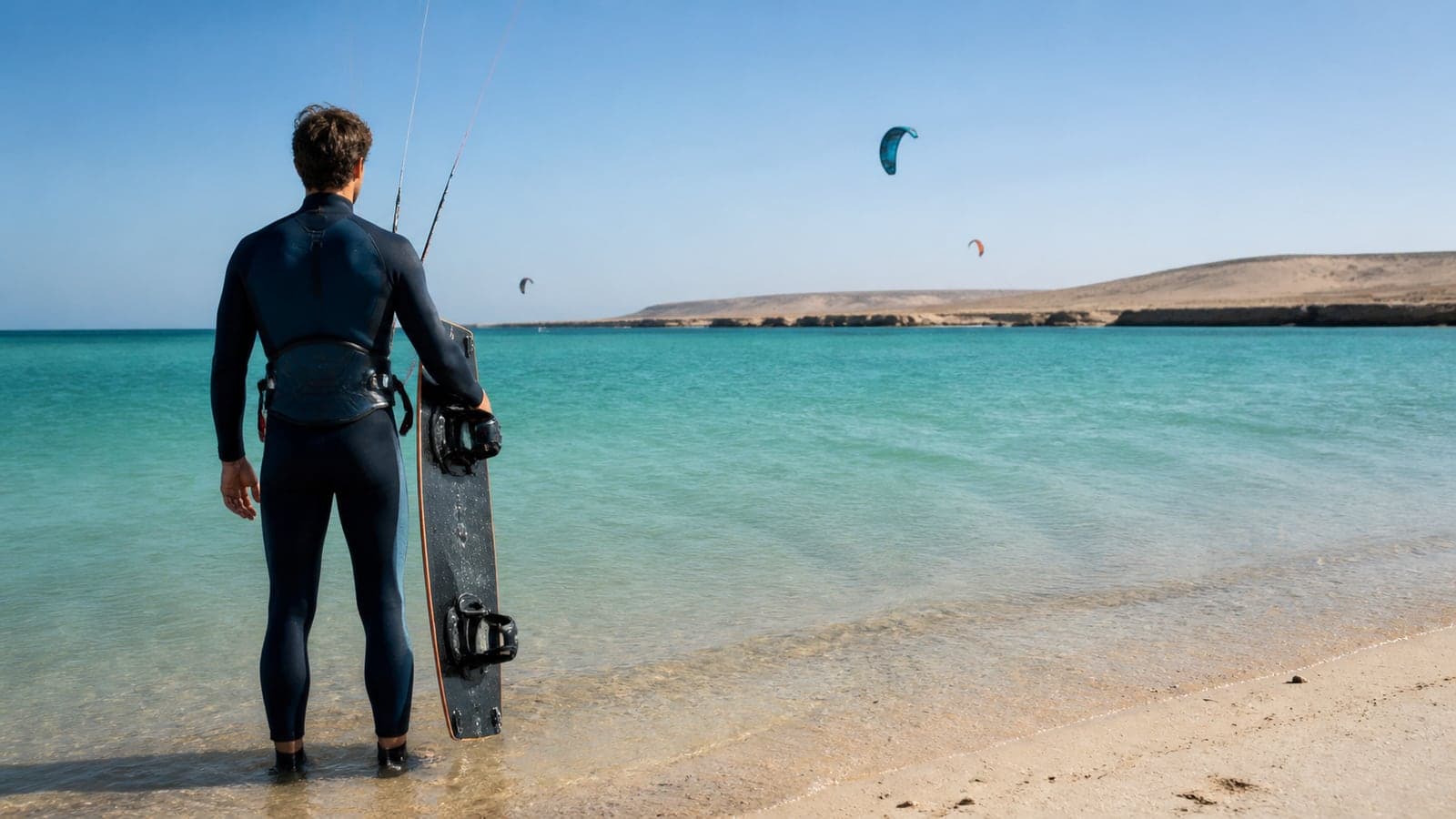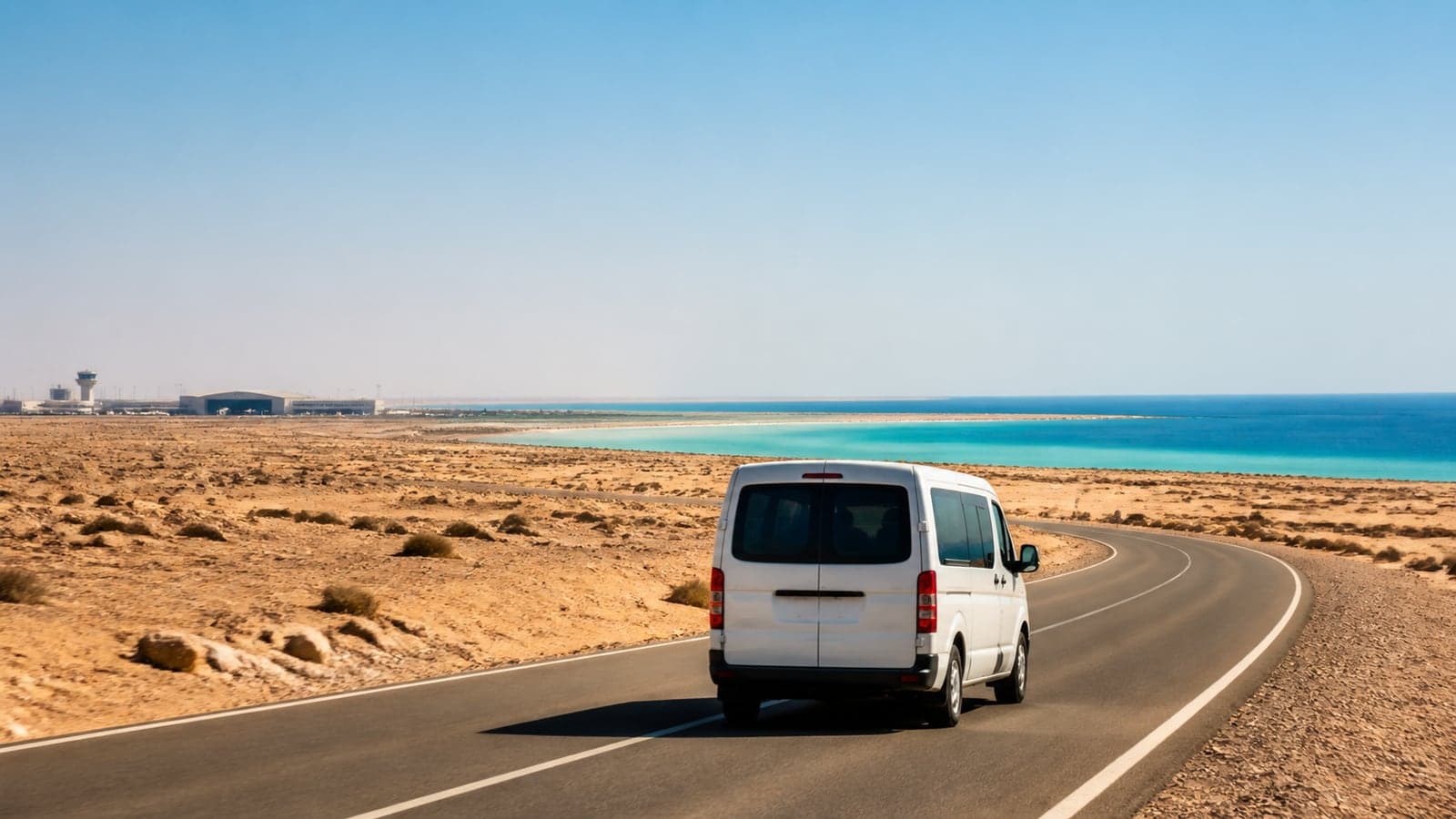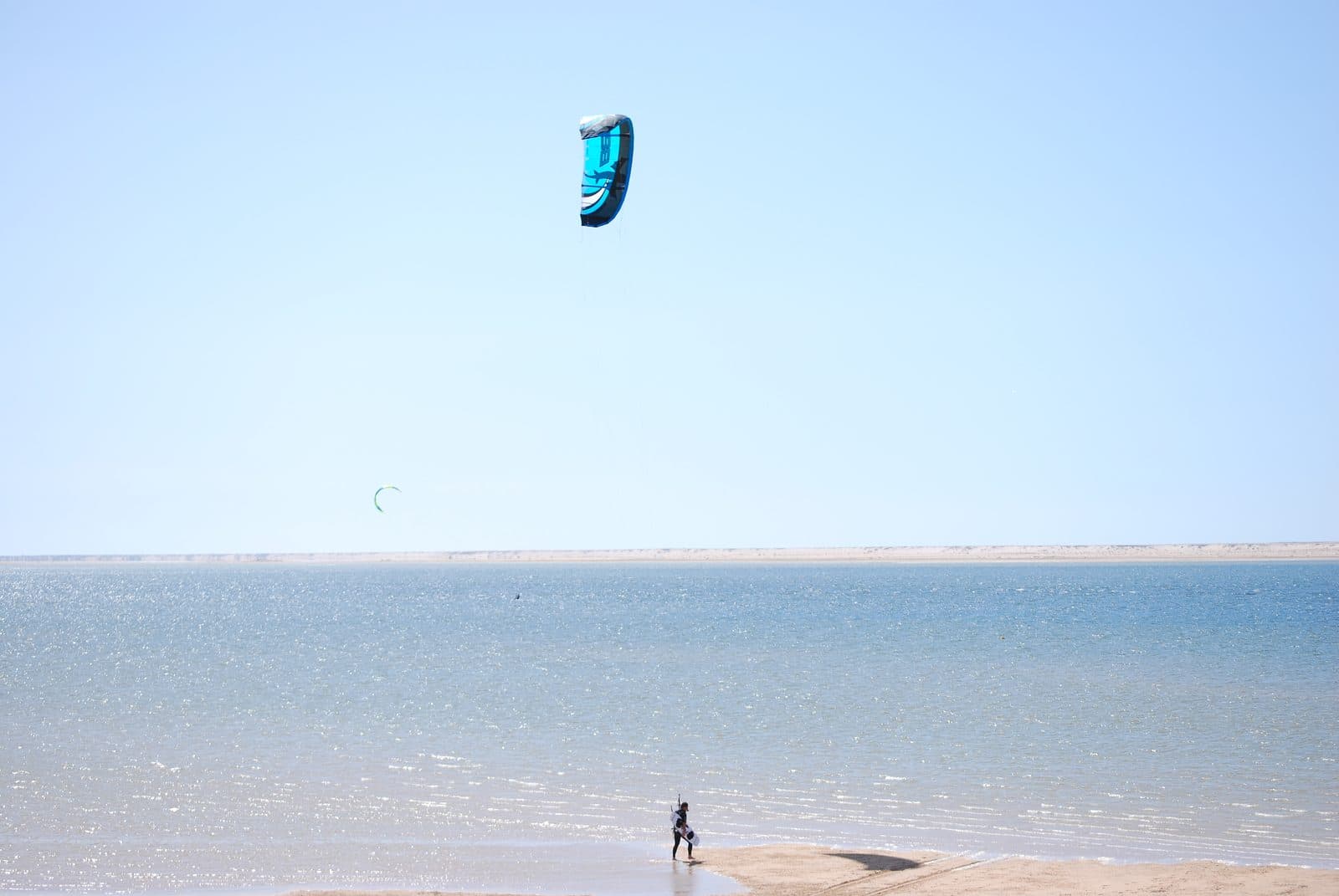
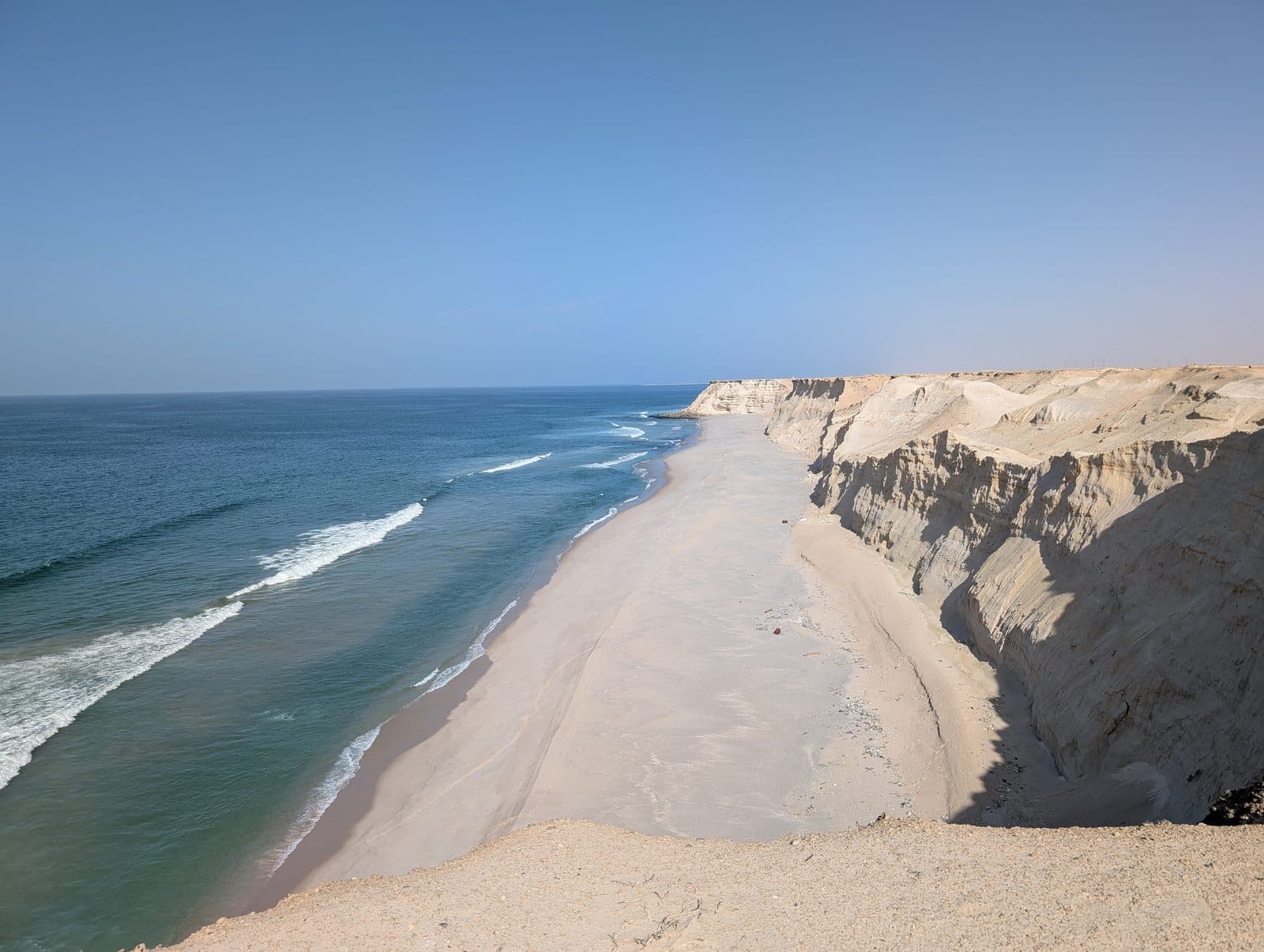
Dakhla sits on a thin sand peninsula sticking 40 kilometres into the Atlantic, on the edge of the Sahara. That geography produces something unusual: a desert town where the temperature barely moves. Average highs run from about 24 °C in winter to 29 °C in September, and average lows from 14 °C to 21 °C. There is no real hot season and no cold season — only a windy one and a slightly less windy one.
The two forces that shape Dakhla's weather
Everything here is the result of two things pushing against each other.
The first is the Canary Current, a cold ocean current that runs south along the African coast. It keeps the sea between 17 °C and 21 °C all year and cools the air sitting above it. That cold water is also why the region has such rich fisheries and why morning fog forms so often.
The second is the Azores High, a permanent zone of high pressure over the Atlantic. Air circulates clockwise around it, and along this stretch of coast that means a persistent north-east to north wind — the trade wind. It blows almost every day, strongest from spring to late summer.
The Sahara sits immediately inland and heats up violently during the day. Hot air rises over the desert, cooler ocean air rushes in to replace it, and the trade wind gets an extra thermal boost every afternoon. That is why the wind in Dakhla is not just present but predictable: light in the morning, building from late morning, peaking mid-to-late afternoon, dropping after sunset.
What the temperatures really feel like
Air temperature alone is misleading here. Two corrections matter:
- The wind takes the edge off. A 28 °C afternoon with 30 km/h of wind feels like a pleasant 24 °C. This is why summer in Dakhla is comfortable while inland Morocco is at 45 °C.
- The sun is much stronger than the temperature suggests. At 23° north with clear skies, the UV index regularly hits 9–11 between April and September. Sunburn in Dakhla happens on days that feel cool.
Nights cool down fast because dry desert air holds very little heat. A 10 °C swing between the afternoon high and the pre-dawn low is normal, and it can reach 15 °C at the lagoon spots away from the water.
Rain: essentially a non-event
Dakhla receives roughly 35 mm of rain per year — less than London gets in a single average month. Most months record under 3 mm, and many record none at all. The wettest window is September to December, when the occasional Atlantic low or a rare convective burst brings a short shower. On average there are fewer than six days a year with more than 1 mm of rain.
What you will see instead of rain is fog and low cloud. Warm air moving over the cold current condenses, especially at night and in the early morning between May and September. It usually burns off between 10:00 and midday, and the day turns clear.
The wind calendar
If you are coming for the wind, this is the section that matters:
| Period | Typical afternoon wind | What it means |
|---|---|---|
| April – August | 20–28 knots | Peak season. Wind on almost every day, often for 6+ hours. |
| March & September | 18–25 knots | Excellent, slightly fewer windy days, thinner crowds. |
| October – February | 12–20 knots | Still good, but expect a few light days per week. Bigger kites. |
The direction is remarkably stable: north-east to north for most of the year, which is side-onshore on the lagoon and offshore on the ocean side of the peninsula. Southerly winds are rare and usually mean an approaching disturbance — they also bring dust from the interior.
The sea
Sea temperature ranges from about 17 °C in February–March to 21 °C in August–September. It is cold for the latitude, again because of the Canary Current. In practice:
- Winter and spring: a 4/3 mm wetsuit is standard.
- Summer and early autumn: a shorty or 3/2 mm is comfortable for most people.
- The lagoon is shallow and can run 2–4 °C warmer than the open ocean on a sunny afternoon at low tide.
Atlantic swell reaches the ocean side of the peninsula year-round, with the biggest and cleanest waves between October and March.
Reading a Dakhla forecast properly
Three habits will make any forecast — including the live one on this site — far more useful:
- Look at the hourly wind, not the daily average. A day showing "18 knots" may mean 8 knots at 10:00 and 26 knots at 16:00. The daily figure hides the session.
- Check the gust-to-wind ratio. If gusts are more than about 1.4× the sustained wind, expect a rough, unstable session — usually a sign of a thermal-dominated or unstable day.
- Watch the direction, not just the speed. A north-east wind is clean and side-shore on the lagoon; an east or south-east wind comes off the desert, is gustier, and pushes you offshore.
The short version
Dakhla is one of the most stable climates you will ever plan a trip around. It is warm but never brutally hot, dry to the point of being rainless, sunny for 10–12 hours a day, and windy on the great majority of afternoons between March and September. The two things that catch people out are the strength of the sun and the coldness of the water — plan for both and the weather will not surprise you.