Dakhla has an unusual advantage for anyone who cares about light: the peninsula has water on both sides. You can watch the sun rise over the lagoon and set into the Atlantic on the same day, without driving more than a few kilometres.
When the light actually happens
Because Dakhla lies far west while Morocco keeps a single time zone, both sunrise and sunset are late by European standards. The difference across the year is significant, and it changes how you plan a day:
| Month | Sunrise | Sunset |
|---|---|---|
| January | 08:47 | 19:38 |
| April | 07:41 | 20:24 |
| July | 07:25 | 20:52 |
| October | 08:00 | 19:37 |
Two practical consequences. First, winter sunrises are civilised: you do not need a 05:00 alarm to shoot dawn in January. Second, summer evenings are long, and the good light often arrives after the wind has already dropped — which is exactly when the lagoon turns to glass.
Sunrise: the lagoon side
The eastern shore of the lagoon catches the first colour, and the water is usually at its calmest before the thermal wind builds. On a still morning the lagoon mirrors the sky completely.
- Best conditions: a morning with high or broken cloud — clear skies give clean colour but less drama.
- Fog: between May and September, warm air over the cold current produces morning fog. It usually burns off between 10:00 and midday, and the moments while it is lifting are the most atmospheric of the year.
- Arrive early: the best colour is often 20–30 minutes before the sun clears the horizon.
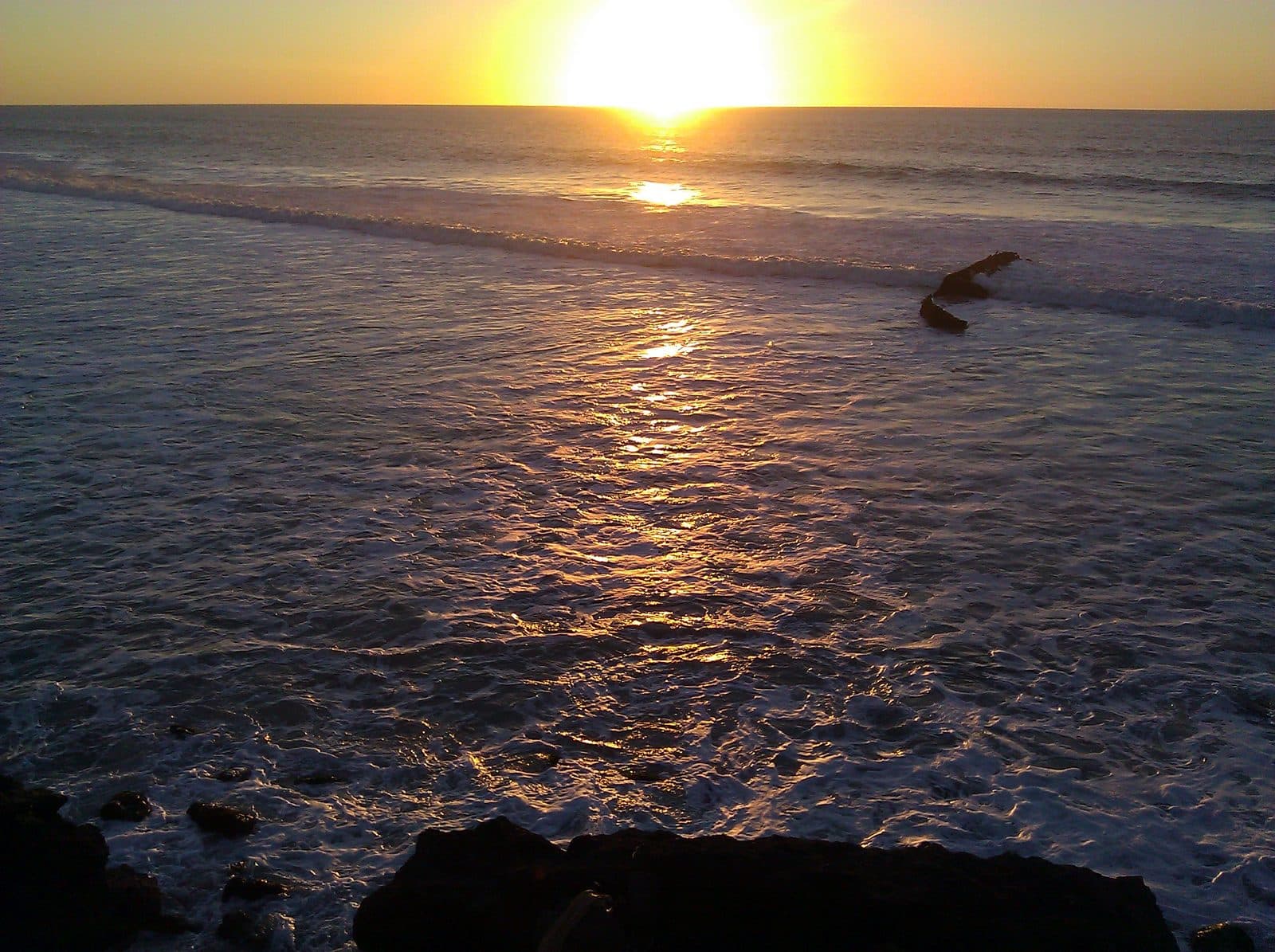
Sunset: the Atlantic side
The western side of the peninsula has an open horizon over the ocean, with no land to interrupt it. The cliffs and the area around Foum Labouir give elevation and foreground; the southern tip near the city works well when you want the lighthouse in frame.
Safety matters here more than anywhere: the edges are undercut in places, the swell is real Atlantic swell, and the light that makes the scene beautiful also makes it hard to judge distance. Stay well back from crumbling edges and never turn your back on the water.
The White Dune and golden hour
The White Dune is the region's signature image — pale sand against turquoise shallows. Two things determine whether it works:
- Time of day. Side light in the first or last hours reveals the texture of the dune. Midday flattens it completely.
- Wind. By mid-afternoon the trade wind is moving sand across the ridge. That can look spectacular in a photograph and is genuinely unpleasant to stand in. Morning is the safer choice.
The tide changes the shape of the water below the dune, so the same viewpoint gives a different picture depending on the hour.
Blue hour and the desert night
The 20–30 minutes after sunset are often better than sunset itself here: the sky holds colour for a long time over the ocean, and the lagoon reflects it. Further inland, away from the city lights, the sky is genuinely dark — the desert south of Dakhla offers Milky Way conditions that are hard to find in Europe. If you plan a night shoot, go with a driver, tell someone where you are, and take warm clothing: the temperature falls fast after dark.
Protecting your equipment
This is the part most visitors underestimate. Between the blowing sand of the lagoon and the salt spray of the Atlantic, Dakhla is hostile to cameras.
- Change lenses inside a vehicle, never on the beach.
- Keep a UV or clear filter on the front element — it is cheaper to replace than a lens.
- Carry a microfibre cloth and a blower; salt haze builds up within minutes near the shore break.
- A simple rain cover doubles as a sand cover.
- Rinse tripod legs with fresh water after ocean sessions — salt destroys locks.
Settings worth starting from
Nothing exotic is required. For the lagoon at dawn, a mid aperture (f/8–f/11), low ISO and a tripod handles the low light. For the dune, a longer lens compresses the ridge and separates the sand from the water. For sunset over the ocean, expose for the sky and let the foreground go dark, or bracket if you want detail in both.
The one Dakhla-specific tip: check the wind forecast before committing to a tripod. Above about 30 km/h you will be fighting camera shake even on a solid tripod, and hanging your bag from the centre column becomes necessary rather than optional.
Sunrise, sunset and golden-hour times for today are on the home page, and the monthly climate guides list the times for the middle of every month.